
Disgruntled Ex-Disney CEO Bob Chapek’s Book Bombs

Former Disney CEO Bob Chapek has denied himself of his happily ever after. The ex-executive’s tell-all memoir covering his rise, fall, and supposed scapegoating has bombed, with more people watching one of the long-forgotten, circa-2021 Disney+ shows that he greenlit than have read his book.
This is the latest development in the Disney’s Bob Swap™️ drama, which has been rebooted and adapted for bookshelves. With the publishing of Chapek’s book, the Days of Our Disney Lives soap opera has been renewed for another season, and Christmas has come early to the lovers of chaos and cattiness out there. I know this is about as tortured as Chapek’s writing, but his reemergence really has been the gift that keeps on giving.
It started a couple weeks ago with Bob Chapek’s media blitz. His media appearances and interviews were an unmitigated disaster, to put it mildly. Chapek wrote this book to tell his side of the story in order to rehabilitate his image, reframe his legacy at Disney, and make himself hireable again. He accomplished exactly zero of that with his first public appearances in nearly 4 years.
If anything, Chapek came across considerably worse than he did in 2022. It’s as if what we saw when he was Disney CEO was the most media trained and personable the Bobot2000 could be. During the last few years of seclusion, he’s reverted back to his factory defaults.
I can’t help but wonder if he even has advisors or a communications team at this point, because it sure doesn’t seem like it. He has made perplexing decision after perplexing decision, with my favorite still being his interview with something called “Valuetainment for Gen-Z.” (Seriously, it’s worth a watch.)
Another high note was the most Chapek quote of all-time in an interview with Bloomberg: “I love private equity.” An appearance on CNBC was awkward and defensive, and the throughline of all of these interviews has been zero accountability for what went wrong and a vendetta against Bob Iger, who lives rent-free in his head. (Understandably so, in fairness.)
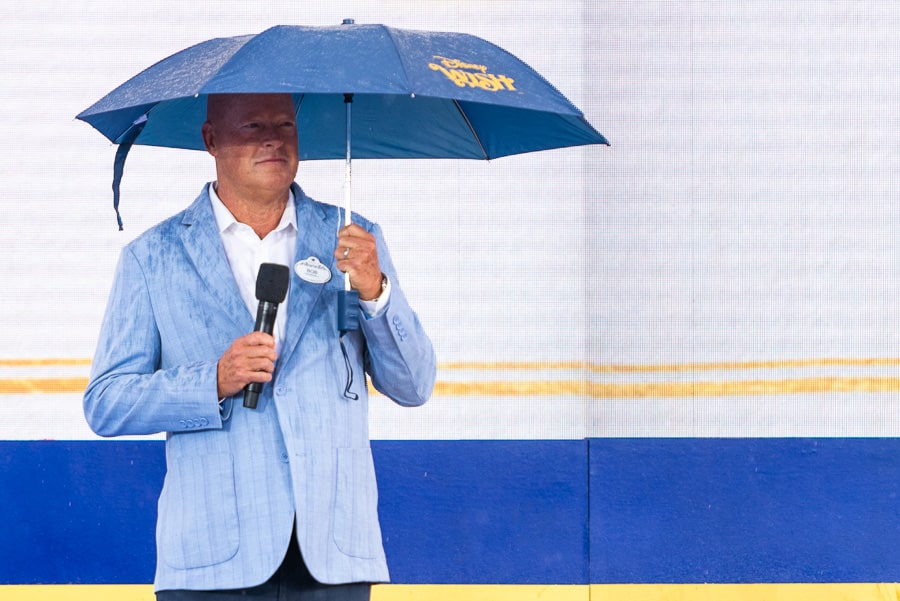
Chapek has defended the wrong decisions, doubled-down on his penchant for price increases and cost-cutting, and continued to express his open disdain for Disney fans. Everything he has said thus far reinforces his own past admissions that he has low EQ or emotional intelligence, and is oddly proud of it.
If anything, the biggest takeaway has been an indictment of Bob Iger’s judgment. How could he talk to Chapek for more than 10 minutes and come away thinking Chapek would be suitable as the public face of the Walt Disney Company?! Beyond a shadow of a doubt, Bob Chapek has proven that he did not and still does not “get” what made Disney…Disney.
While I’m not so surprised by just how painful Chapek’s media tour was to watch and read, I honestly am somewhat surprised by how badly his book has sold. If anything, the trainwreck made me more excited for his memoir, as it was abundantly clear Chapek wasn’t publishing a puff piece. He was going scorched earth, and it was going to be a mess! As it turns out, not all publicity is good publicity.

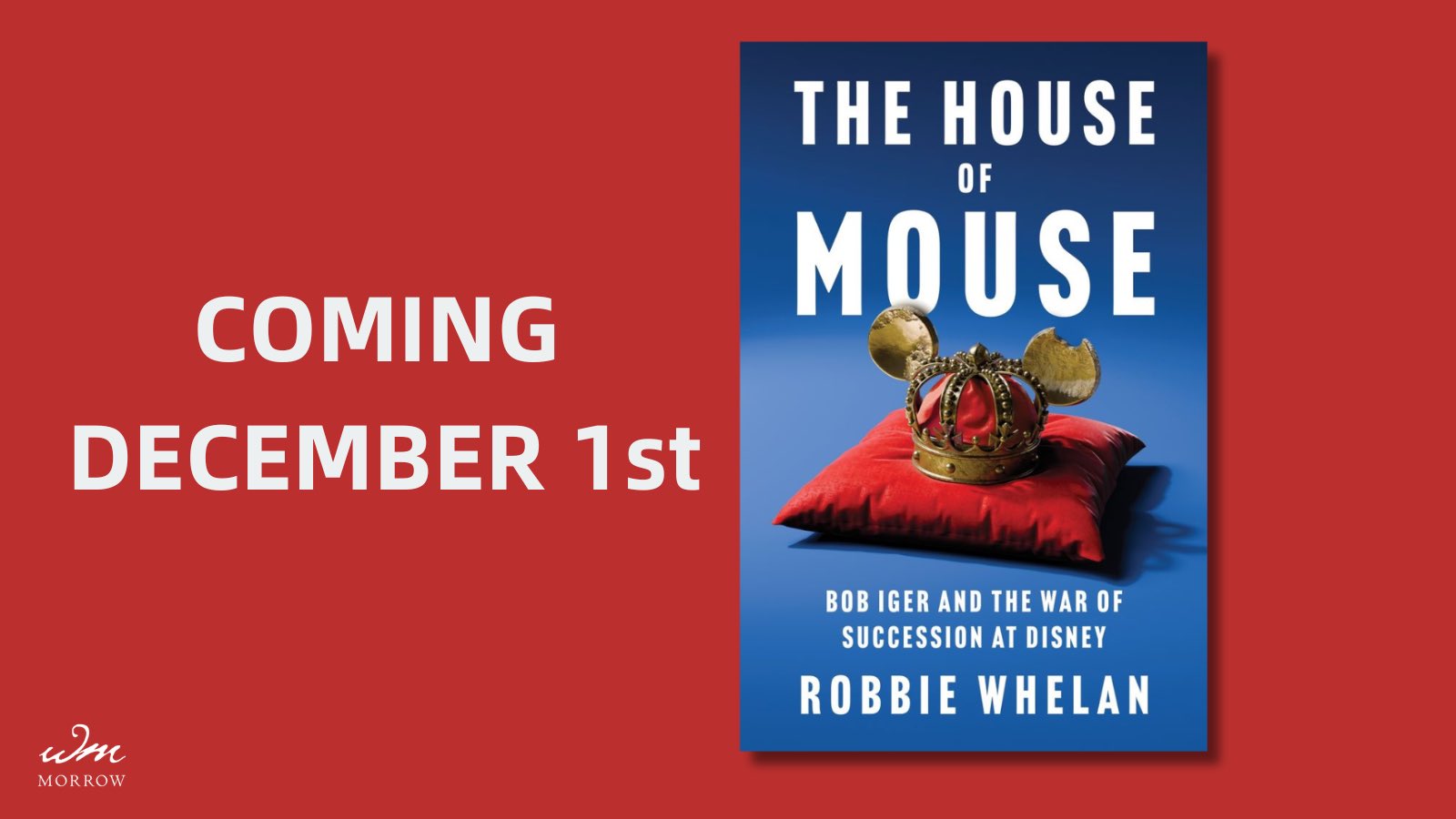
The latest development comes via Hollywood insider Matthew Belloni of Puck News, who among other things knew about Disneyland Abu Dhabi before its announcement and that Josh D’Amaro would be named Disney CEO (with Dana Walden sticking around) before that happened. He’s also been covering Bob Iger’s fight to bury Robbie Whelan’s upcoming book: The House of Mouse: Bob Iger and The War of Succession at Disney.
Belloni reports that, Bob Chapek’s memoir, Behind the Castle Walls: My Thirty Years at the Happiest Place on Earth, only sold approximately 2,400 copies during its first week of sales. Ouch. Belloni attributes this stat to BookScan, which is the publishing industry’s go-to data service that tracks weekly point-of-sale retail purchases.
This would seem to be accurate. Chapek’s book failed to make the top 10 on the New York Times nonfiction best sellers list. It’s unclear where, if at all, it did rank on the list during its first week, but it currently isn’t there at all.

If you’re looking for a more positive spin, Behind the Castle Walls is currently #1 on Amazon. Well, its list of Business Ethics books. For whatever it’s worth, #2 is a book from 2008 and #4 is about the fall of Enron. I guess that just proves if you narrow the parameters enough, anything can be the best!
Meanwhile, Chapek’s book is #6 in Biographies of Business & Industrial Professionals and #437 in Humor & Entertainment. (There are parts of it that made me laugh out loud!). On Amazon’s overall best sellers list, Behind the Castle Walls ranks #4,038. Double ouch!
At risk of stating the obvious, all of these numbers are really bad. I am shocked that it only sold 2,400 copies, and can’t help but wonder what percentage of those were bought be people who work for Disney or in the Hollywood and/or blogging trades. I would’ve bet that 10,000 copies would’ve been sold in Burbank alone!
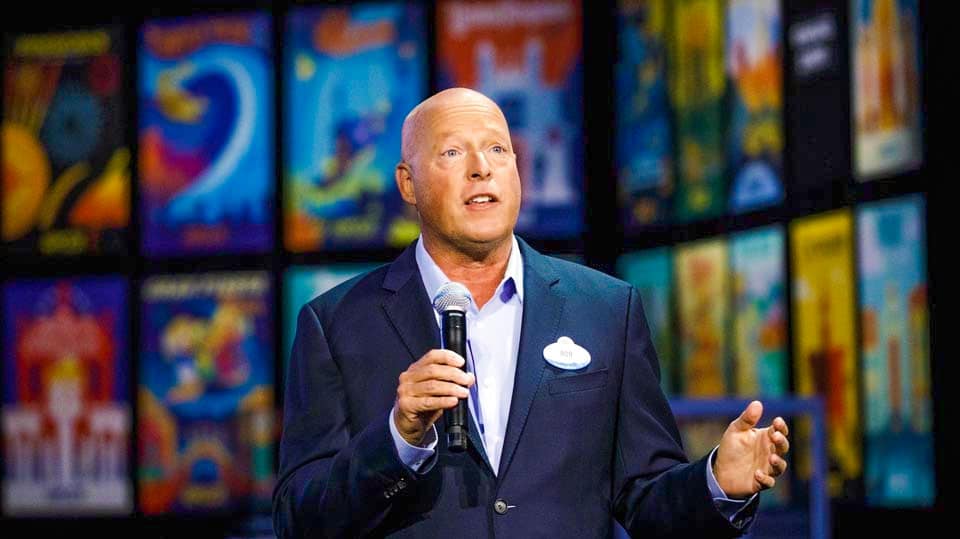
It’s less surprising that Disney fans didn’t buy what Bob was selling. Far and away the top response we heard when “recommending” the book has been that fans were not going to give that man another dollar. Some said they’d check it out from the library, but most refused to purchase on principle. Even more indicated, flatly, that they had no desire to read Chapek’s side of the story.
If you’re inclined to take pity on Bob Chapek or view this pile-on as a bit mean-spirited, need we remind you of just how much pain he inflicted on Disney fans during his reign of terror? Or how he has zero remorse for it, and feels like he did nothing wrong?! (Seriously, two of the themes of his book is that “I was right all along” and “it was someone else’s fault.”)
If that doesn’t do the trick, just keep in mind that Bob Chapek was paid $20 million in severance to go away and received north of $100 million in compensation during his time in the c-suite. He didn’t write this book for the money in the first place; he did it for image rehabilitation. As it turns out, he’ll get neither.

Chapek’s memoir is published by Gallery Books, a major publishing imprint of Simon & Schuster. It’s co-written by Don Yaeger, a New York Times bestselling author and longtime associate editor at Sports Illustrated. It appears that co-writing books with media figures is kind of Yaeger’s thing.
Behind the Castle Walls currently has a 4.0 review score on Amazon from 65 reviews and a 3.2 on Goodreads. In combing through those out of curiosity, it does not appear to be a ‘review bombing’ situation. People just don’t like the book.
To put that into perspective, Bob Iger’s Ride of a Lifetime has a 4.8 rating on Amazon from over 24,000 reviews and a 4.4 on Goodreads. DisneyWar sits at 4.6 on Amazon and 4.1 on Goodreads despite being far and away the best book of the trio. Meanwhile, Joe Rohde’s new book, Floating Mountains: The Art of Imagineering the Impossible, holds an impressive 4.8 and 4.6 score.
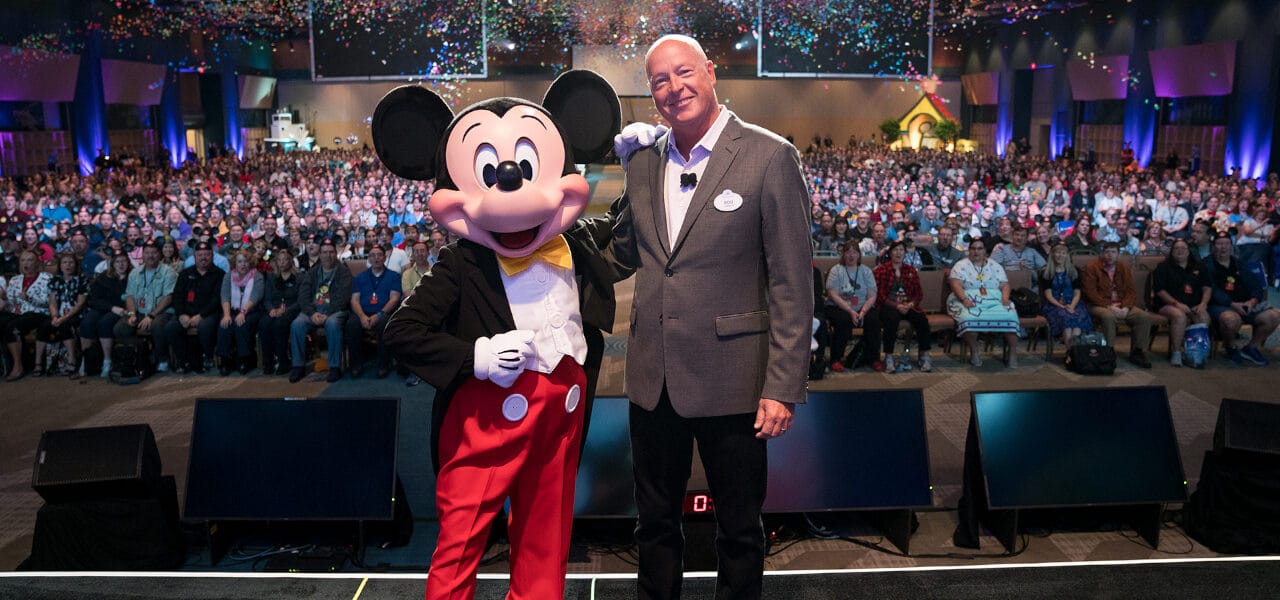
I’m only partially through Behind the Castle Walls (it’s been a busy few weeks), and probably won’t get around to doing a full review of it. After all, so many of you have already said there’s no way you’ll buy it, so what’s the point? Instead, I’ll share a quick capsule review here.
Thus far, I’m really enjoying Behind the Castle Walls. Seriously! It is shocking candid, contains countless interesting anecdotes, and gives insight into Chapek’s thinking. It’s a really fascinating read, and clearly was not polished by a PR team or editors trying to massage the messaging. The book is unpolished and rough around the edges (mostly in a good way); it’s easy to read and is a page turner.
Whereas Iger’s memoir is more calculated and offers leadership lessons, this feels less contrived, for lack of a better word. There have already been a few occasions when I’ve wondered “why would you publish these words?!” It feels like a quasi DisneyWar spin-off or sequel, but written by one of the main characters who didn’t quite comprehend how to paint himself as a sympathetic figure. This is good for readers, as we’re getting something closer to being unvarnished.

With that said, I would only recommend this book to those who remember living through the Chapek era and have a decent degree of media literacy. The most charitable framing is that Chapek is an unreliable narrator of his own story. He’s like the Holden Caulfield of former CEOs. The less charitable take is that he’s telling half truths or lying by omission.
I can’t speak to his state of mind, so it’s unclear which is actually the case, but I’m inclined to believe Chapek is “only” an unreliable narrator. There’s too much truth-telling that amounts to statements against his own self interest. Regardless, it’s critical to understand this so you don’t take what he’s saying at face value, as at least some of his claims are false or misleading.
This is simply Chapek’s recollection of what transpired; the contemporaneous record calls a lot of it into question. I suspect the independent House of Mouse: Bob Iger and The War of Succession at Disney book will offer even better balance and fact-checking.
The most interesting tidbits thus far have come from earlier in Chapek’s career when he helmed the home entertainment and video division, perfected the “Disney Vault” strategy, and began his corporate ascent.
From this and other comments he made during his time at Parks & Resorts, it’s very clear that Chapek was an astute businessman. When playing to his strengths, he was incredibly successful and there can be little doubt about his acumen. The problems came when he was elevated to public-facing positions and his worst impulses went unchecked.
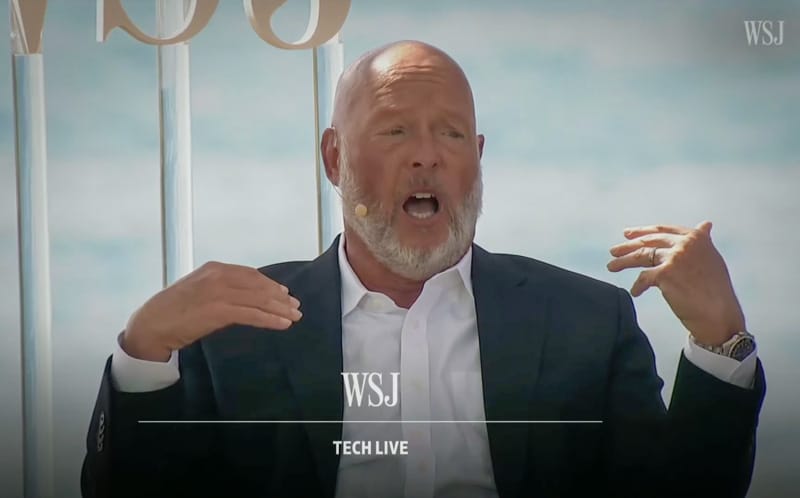
Towards the end of his tenure as CEO, it became increasingly clear that Chapek had lost the plot. He became outwardly defensive, openly faulting fans for not comprehending his approach. I was never a fan of Chapek, but I’ve previously pointed to this October 2022 WSJ conference as the point where he completely and irrevocably lost me. Chapek’s book is basically a continuation of that. It’s unfortunate that he hasn’t taken the time for self-reflection or introspection in the years since.
Ultimately, I am looking forward to finishing Behind the Castle Walls: My Thirty Years at the Happiest Place on Earth. I’m a sucker for the palace intrigue that unfolded behind the scenes during this tumultuous time. It was rough to live through, and I still have an intense dislike for Bob Chapek, and his complete lack of self-awareness or reflection. It seems that, 4 years later, he hasn’t changed much.
However, enough time has passed that it’s cathartic to hear Chapek’s side of the story, and see the extent to which that’s divorced from reality. It’s also fascinating to see how he views decisions that are clearly negative from my perspective as things about which he should boast.
There are anecdotes that are interesting, but the best part of the book thus far has been the window into the fantasyland of Chapek’s mind. I’m not sure how many fans want to look through that, though, which probably explains the low sales stats. To each their own, but I think it’s a delightful trainwreck. This is my version of guilty-pleasure reality television hate-watching.
Need Disney trip planning tips and comprehensive advice? Make sure to read Disney Parks Vacation Planning Guides, where you can find comprehensive guides to Walt Disney World, Disneyland, and beyond! For Disney updates, discount information, free downloads of our eBooks and wallpapers, and much more, sign up for our FREE email newsletter!
YOUR THOUGHTS
What are your thoughts on Chapek finally breaking his silence? Are you one of the 2,400 people who purchased Behind the Castle Walls: My Thirty Years at the Happiest Place on Earth? What’s your review of Bob’s book? Do you feel more sympathetic to Chapek now than you did in 2022? Anything to add about Disney’s Bob Swap™️, replacing Chapek with Iger, or the Battle of the Bobs? What about anything else covered here? Agree or disagree with the firing of Chapek? Hearing your perspective–even when you disagree with us–is both interesting to us and helpful to other readers, so please share your thoughts below in the comments!





I listened to the audiobook, which was read by Chapek, making it even more personal. I loved listening to the book and hearing Bob’s perspective. While I definitely didn’t agree with many of his decisions, I do have a greater understanding of Chapek. However, the CEO years section just sounded like a very bitter employee who refused to see his part in the situation. Like most things, I think the truth lies somewhere in the middle. I look forward to your final review!
The book is reserved at the local library and I will read it when it comes in. Tom’s point about Chapek being successful in prior non-public facing positions tracks to my view that he sounds like the guy who you don’t want to hire to be the GM of your NFL team but instead the guy the GM should hire to manage the team’s salary cap.
I appreciate all your takes on “the Bobot2000” & his book. I have a huge tbr list, all books that I actually expect to enjoy, so I may get around to this in 3-4 years. Otoh, I can’t wait for “Disney War II”. So you’ve given me all the insight I need on his book for now. Thanks for taking one for the team, Tom!
I would love a full review when you’ve finished!
“He’s like the Holden Caulfield of former CEOs”
Love this comparison. I’m, like, 42nd in line for the library hold, so I’ll get around to Umbrella Bob eventually.
But I keep trying to get people to read DisneyWar by describing it as “Game of Thrones but with 90s media figures” so you know I’m in the pocket for this.
Count me one if the few who finished the entire thing – as an audiobook narrated by Bob C himself!
I just finished the entire thing this week and have been anxiously awaiting your book review – or perhaps we could start a book club discussion?
I will say this – Bob is an unreliable narrator and the first 2/3 of his book didn’t change my mind or opinion about his tenure as CEO. However, if what he claims about Bob I’s treatment of him after he became CEO is even partially true, it’s not a good look for *either* of them.
I can’t wait to hear Bob I’s side of the story.
“I can’t wait to hear Bob I’s side of the story.”
Given how calculated Iger is, I cannot imagine he sees any incentive to respond after only 2,400 books sold. His response would only give more oxygen to Chapek’s claims.
I’m about a quarter way through the book – when you read books from say Kevin Rafferty or Marty Sklar, you get a sense of whimsy working for Disney and you feel the culture oozing throughout the storytelling.
Chapek’s book thus far lacks that Disney feel. He does speak to how Disney was a magical place for him growing up but you don’t feel it as you do with other longtime employees’ memoirs. He’s a corporate person through and through; every company needs that balance in leadership to be successful (the Roy to your Walt).
However, the unfiltered tone throughout the first quarter of the book is defense. I’m not disappointed per se but I was hoping for a bit of self-realization…a nugget or morsel at least. I also question Iger’s judgment of making this selection unless he saw what was coming and knew a different leadership style was needed to pull through the upcoming pandemic.
Also, wanted more on his role with leading the new home video department. For something that had such an indelible impact to all of us for a few decades, it was heavily glossed over.
I’m not sure I would call it a page turner, more an eye roller! 😉
“About as tortured as Chapek’s writing” is right. I joked with my husband that if I turned reading this book into a drinking game and took a shot every time Chapek referred to himself as a “disruptor” who was “disrupting” the status quo, I’d be dead.
I agree with a lot of your thoughts on the book. Chapek came across as (maybe understandably) defensive, taking proud ownership of some choices others might deem questionable. I’m thinking specifically of the direct-to-video sequels, but there are certainly others. He appears to be an astute businessman, but maybe one with zero charisma. I like Bob Iger, but Chapek’s appointment absolutely causes one to question Iger’s judgment.
I’ve already preordered Whelan’s House of Mouse. Can’t wait.
“Zero charisma” – perfectly stated!
It seems like it would be easy to find avenues to publicize a book hating on Disney and Iger. Chapek should have been on those outlets all week promoting the book. It shows another example of him as someone not getting it.
How dare you suggest that something called “Valuetainment for Gen-Z” wasn’t the best way to promote this book because the teens on TikTok are illiterate.
Joking aside, no one I know in the Disney space was approached with interview or advance copies, as usually is offered with something like this. The lack of interviews makes sense given that most of us are hostile towards Chapek, but usually the publisher or a publicist would nevertheless reach out with review copies, press releases, etc. This had none of that.
“If anything, the biggest takeaway has been an indictment of Bob Iger’s judgment. How could he talk to Chapek for more than 10 minutes and come away thinking Chapek would be suitable as the public face of the Walt Disney Company?!”
… because Iger knew what was coming and didn’t want his legacy to be tarnished. Sure, he probably didn’t know that COVID was going to be a thing, but Chapek was definitely setup as the fall-guy for the decisions that Iger had already put in place/signed-off on years prior — including so, so many of the Entertainment division choices. Iger also saw that a natural business downturn was coming prior to COVID — it’s only because the world inflated everything away during the pandemic that the true business cycle recession never happened (yet).
Haven’t read the book, nor intend to —and not out to defend Chapek — but I get sick of people not remembering how many things were already starting to change in 2018-2019 in the parks, or blaming the COVID-era movies/Disney+ strategies on Chapek when those were all greenlit during Iger’s first reign, or the social-consciousness/woke (pick one depending on your point of view) corporate intrusion into everything, etc. ALL of that stuff started under Iger.
It really was a masterclass in politicking by Iger.
I didn’t comment before, but I’m in the came of “…no desire to read Chapek’s side of the story.”. I read and enjoyed Disney War, but I lived through the Chapek era and have no desire to revisit it.