
Why It’s Time to Bring Back the Disney Store for Real.
Few things excited me as a kid like my family’s pilgrimages to the mall. We’d pile into my grandparents’ Bronco, and head to Woodland Mall with a long list of different destinations that everyone wanted to explore. These trips were a chance for the pages of catalogs I’d browsed to come to life.
I’d inspect the LEGO boxes and models at Toys R Us; sneak a peek at the video games at Electronics Boutique; listen to Mellon Collie and the Infinite Sadness at Sam Goody; test the latest gear at Galyans; get anxious and impatient while my parents browsed Waldenbooks. You get the idea. The mall was a rare visit to a dimensional world of retail that I otherwise only saw in print.
The Disney Store is central to these memories. I was a huge fan even as a child, just like virtually every child of the 1990s. It was the heart of the Disney Renaissance. The playground and lunchroom were the original forums for trip reports, and regaling the class with stories from your Walt Disney World visit would mesmerize the audience. Even telling tales of a visit to the Disney Store would capture the attention of a (smaller) crowd.
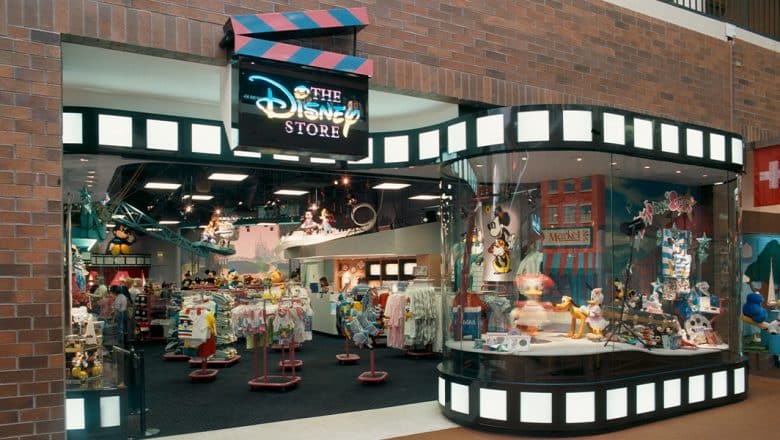
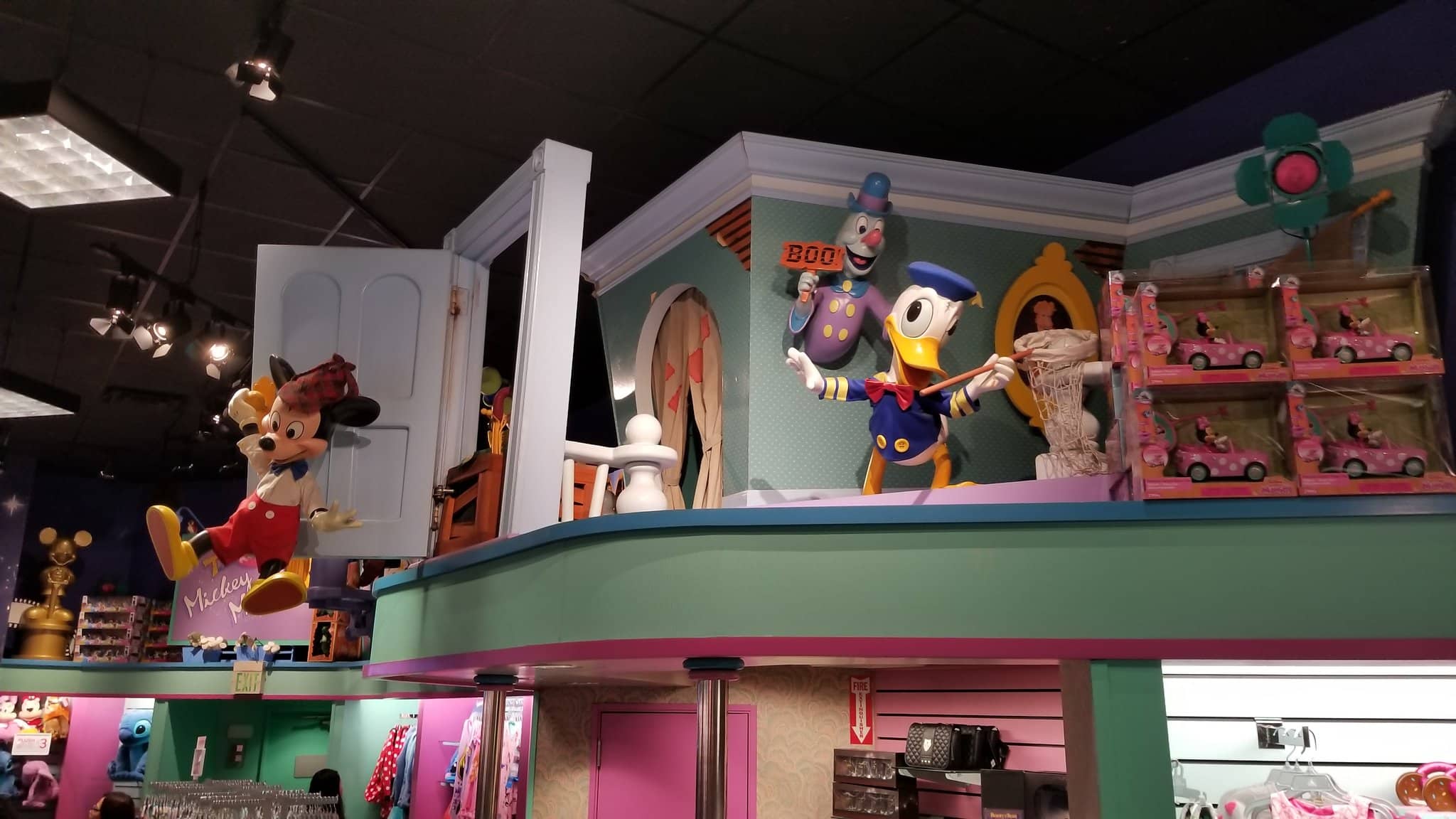
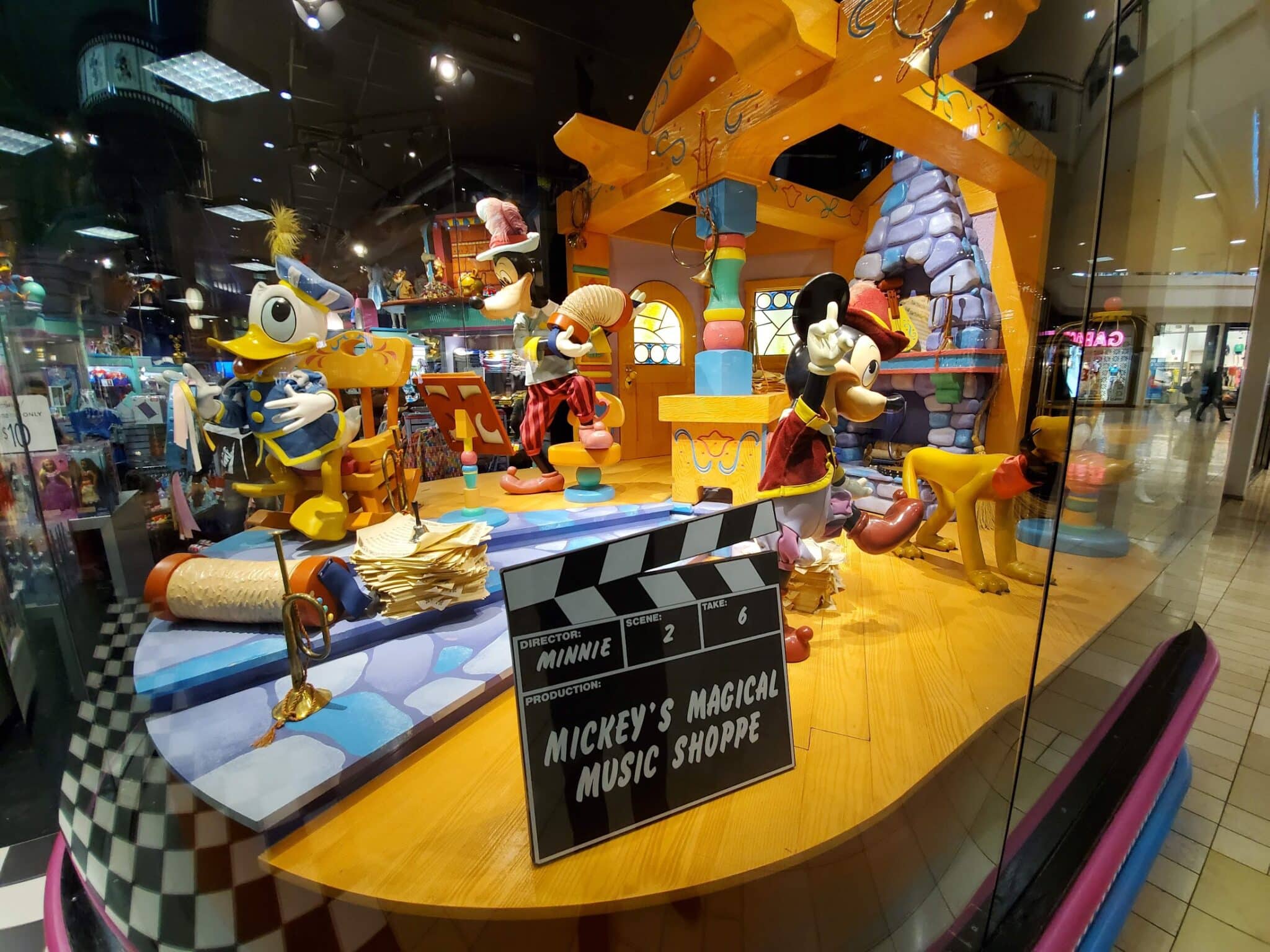
The Disney Store was a window into the world of Disney. It offered clues about what was coming soon, both at Walt Disney World and in theaters. Depending upon when you visited, it would share a sneak peek at the big new characters via merchandise and the hot holiday toys. (Photos throughout this post of circa 1990s Disney Stores courtesy of Hector A Parayuelos.)
More than that, the Disney Store was a place to get your “fix” in between trips. Sure, we had releases on VHS and a modest number of Disney toys at home. But there was something to be said for that giant pit of stuffed animals at the back of the store, which was fun to dive into and “smelled like Disney.” (If you know, you know.)
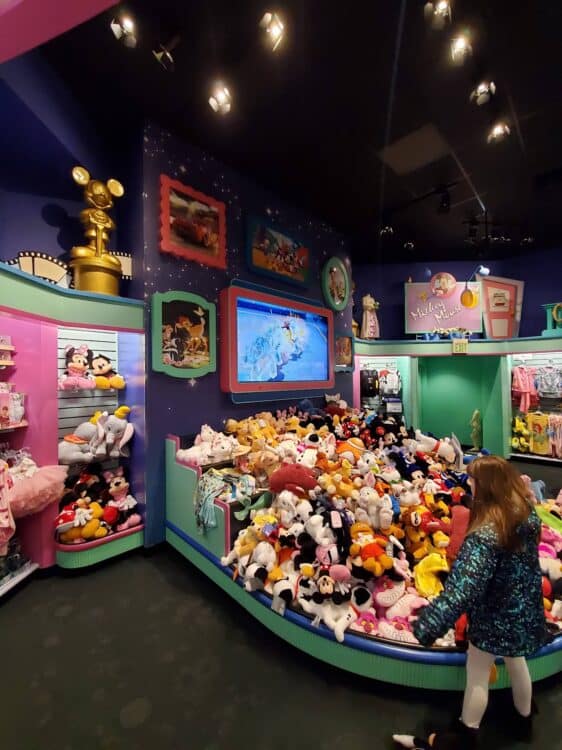
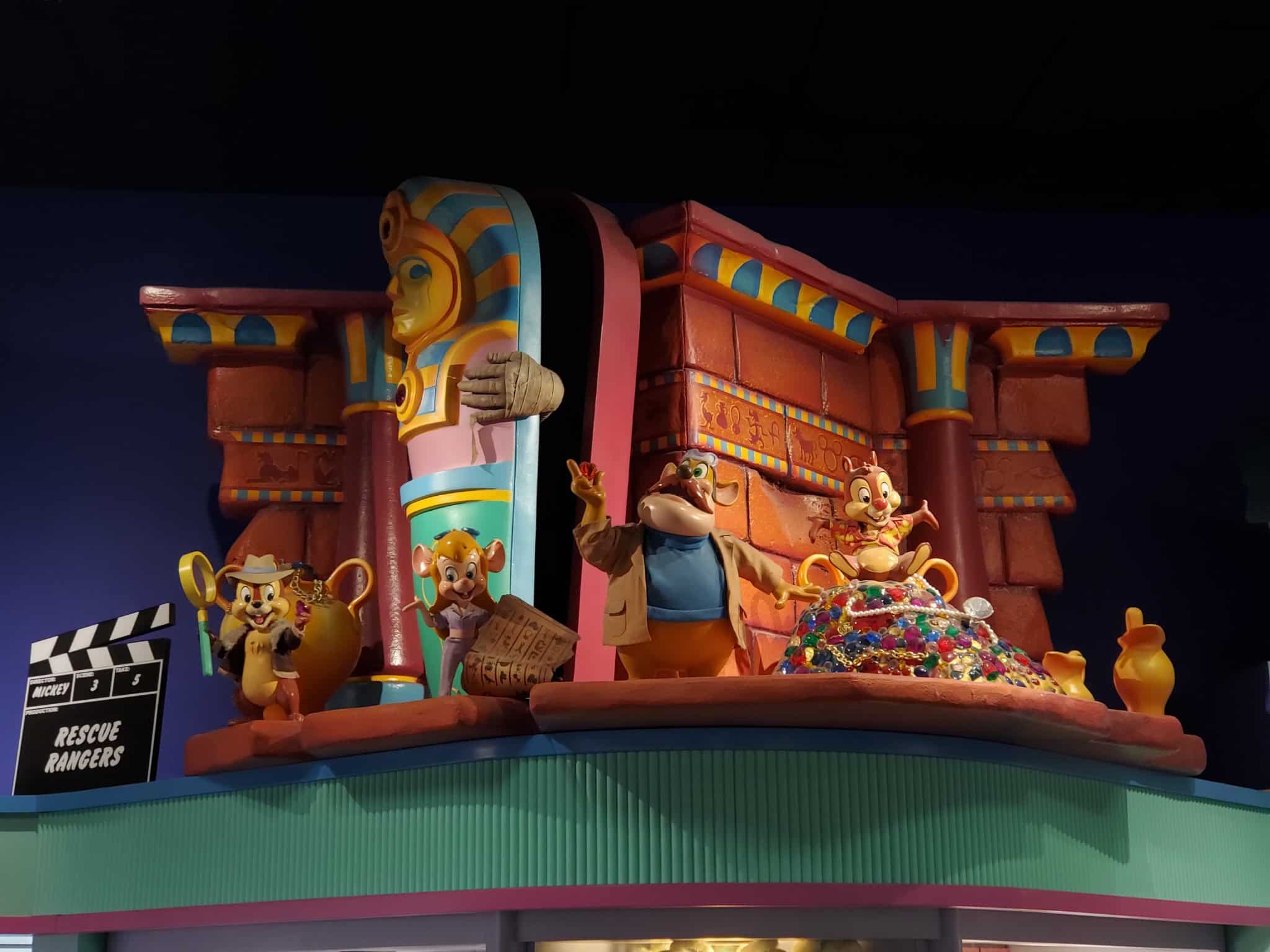
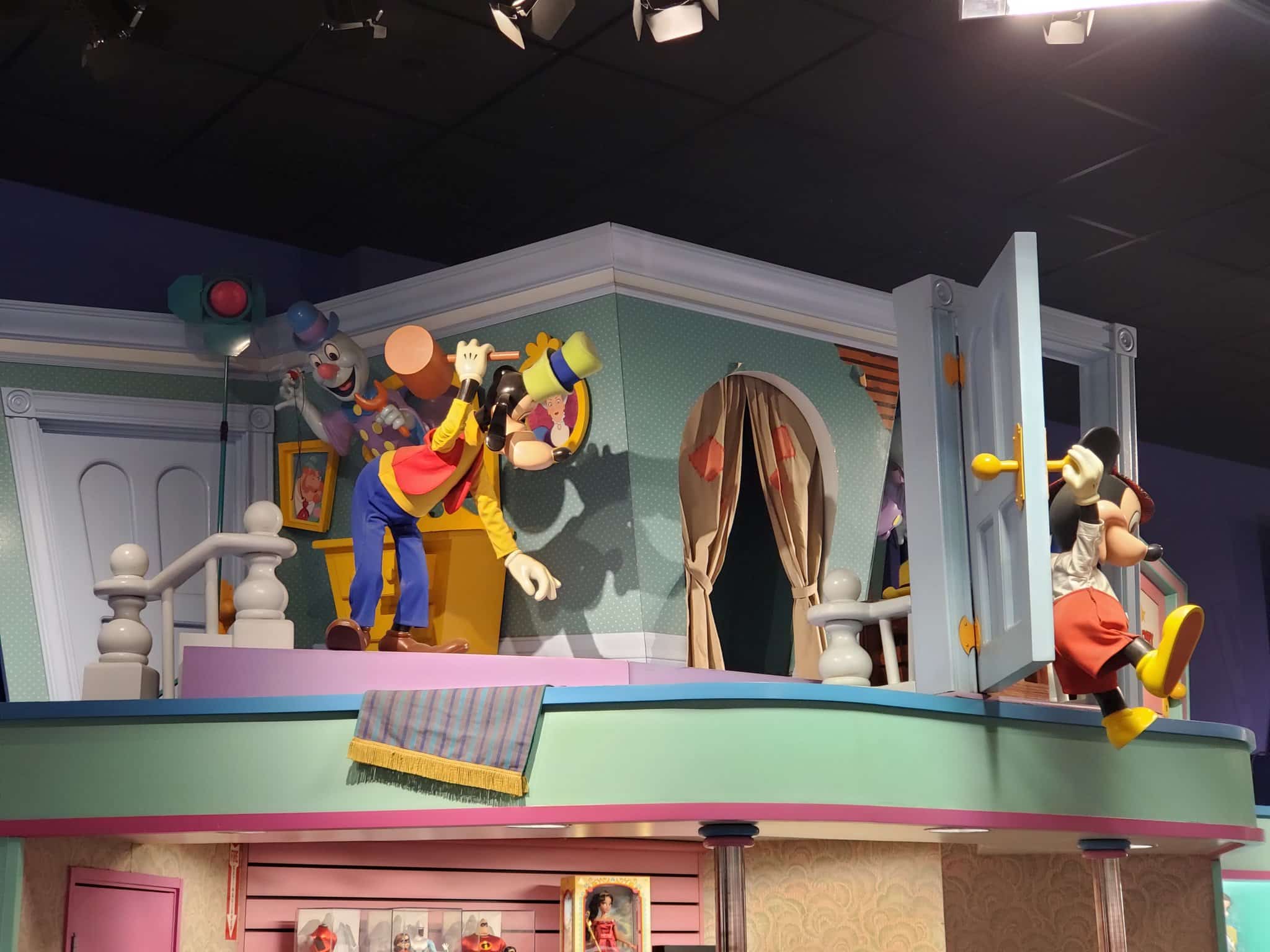
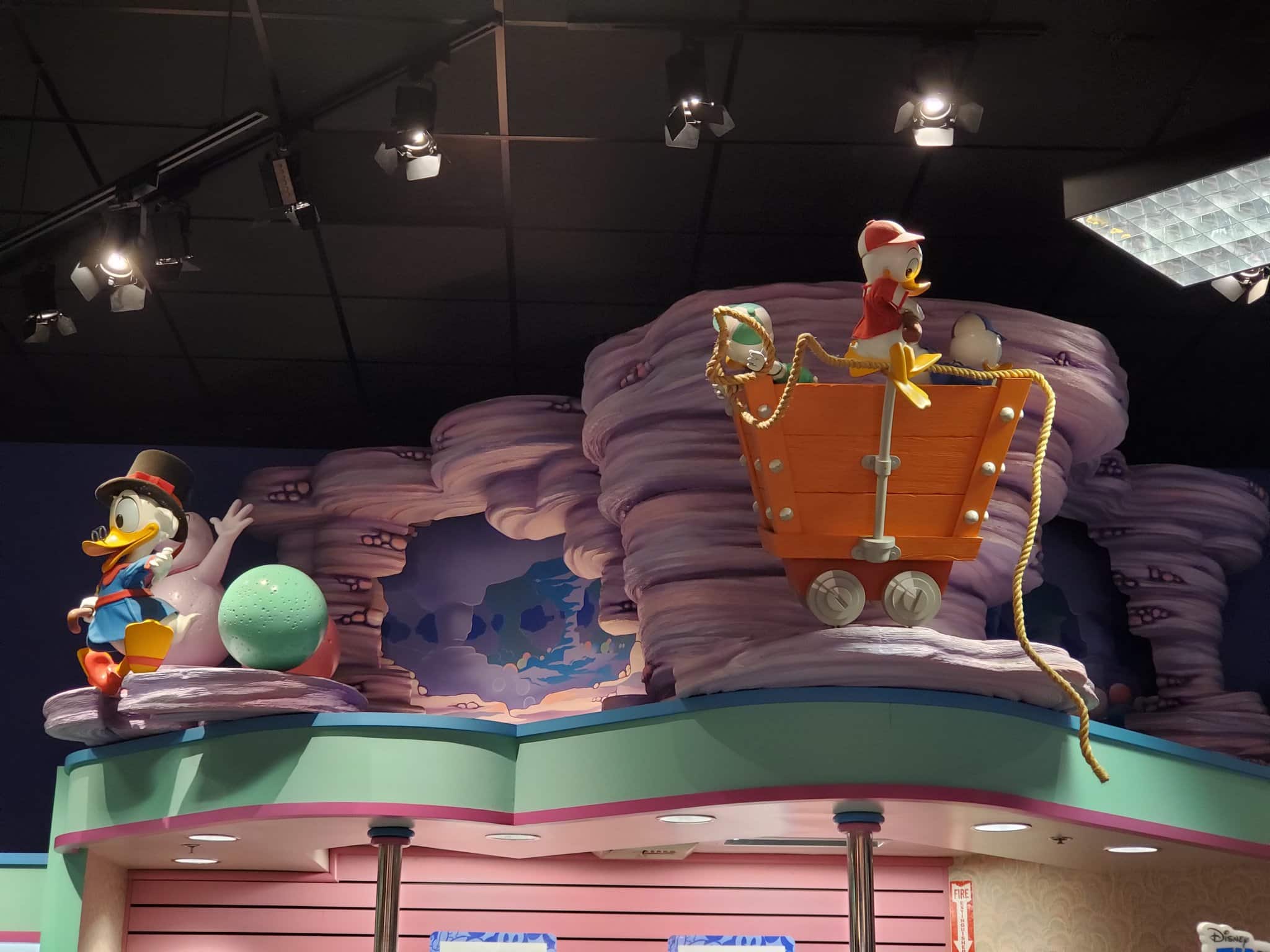
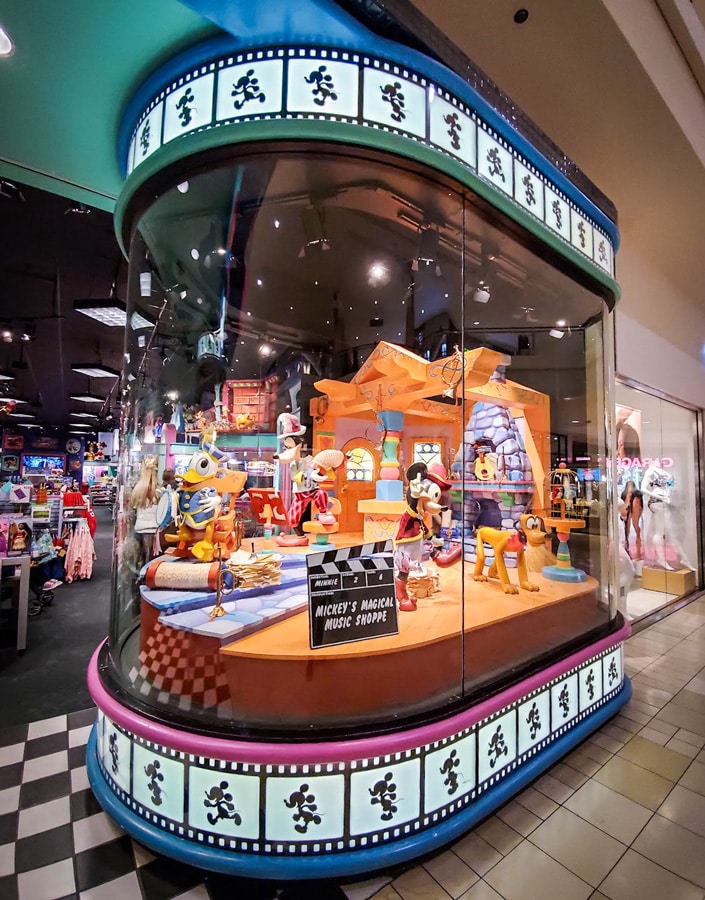
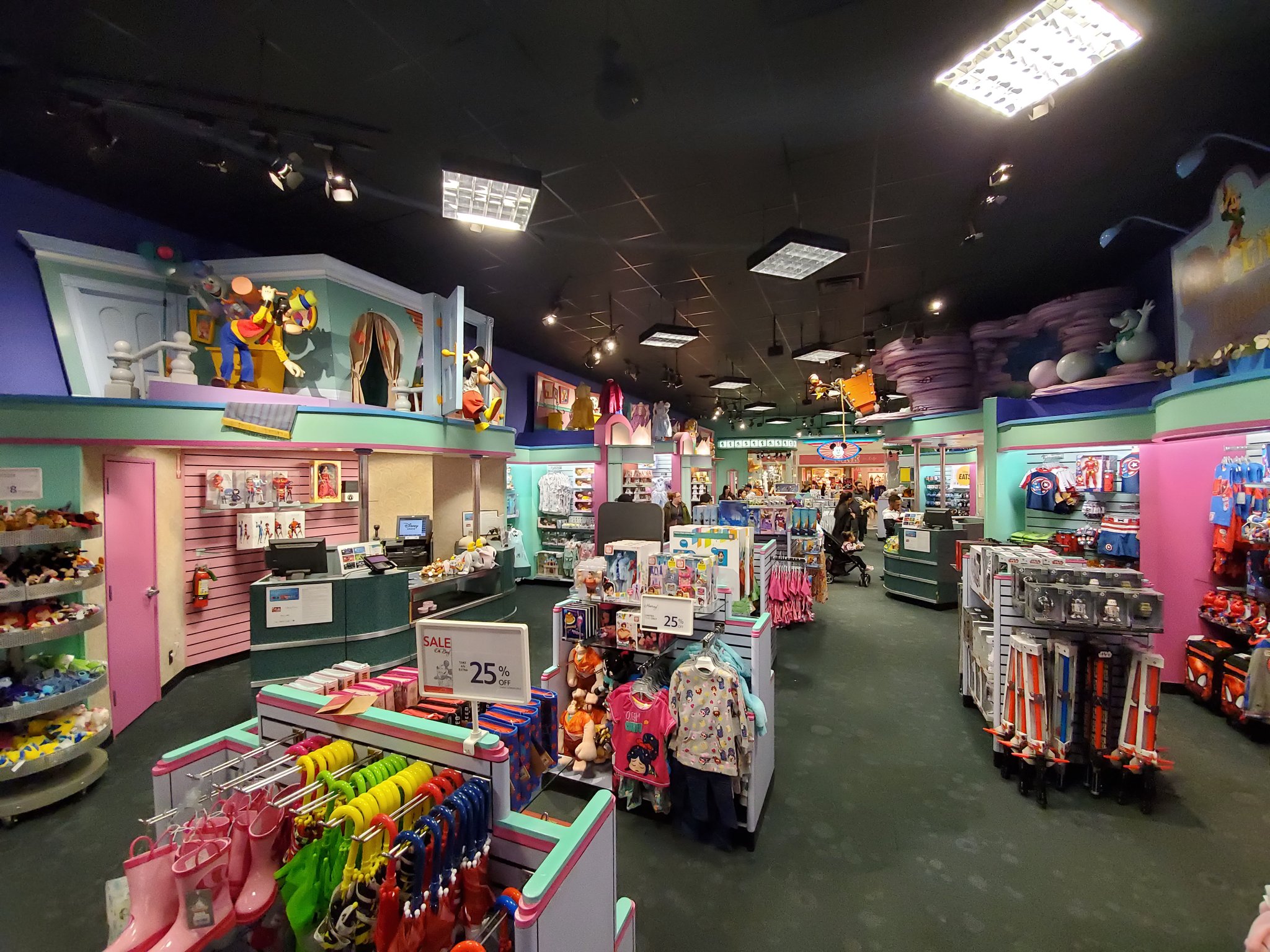
Then there were all of the displays around the store. Above the shelves of merchandise, the Disney Store had its own ‘show scenes’ with dimensional figures from movies and little visual gags. These were incredibly elaborate by retail standards–like a Fantasyland dark ride, minus the ride.
Visiting the Disney Store was like a taste of Walt Disney World. It left you excited about all of those characters and stories, but also, wanting more. Of course it also sold plushies, dresses and dolls, but the exciting thing about the Disney Store was less what it was selling and more about being there.
I would hazard a guess that the Disney Store did as much ‘business’ in the form of kids pestering their parents to book vacations after visiting–or even while visiting since they sold park tickets. That was its key purpose for me. It was like a commercial for all things Disney that little kids could step into.
Disney Store’s Decline
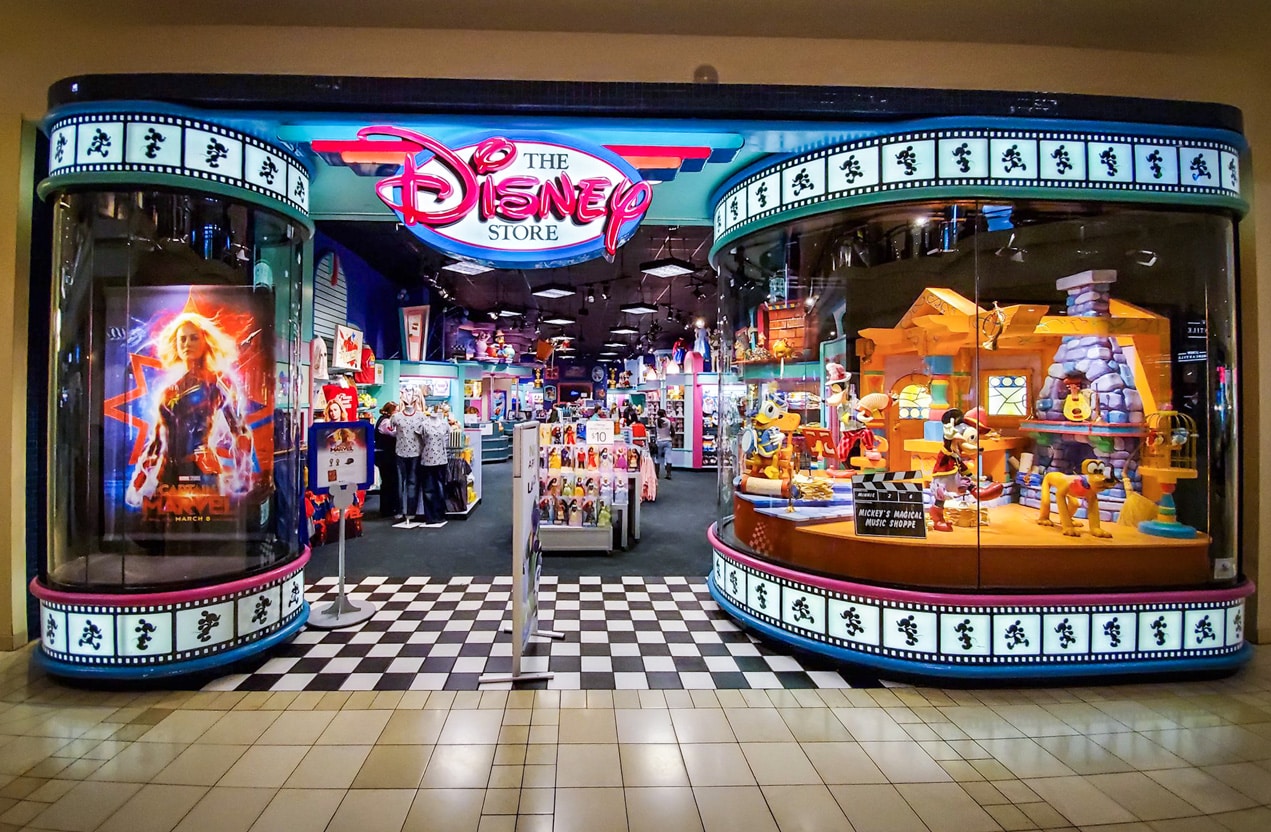
Fast forward a couple of decades, and most locations of the Disney Store were remodeled in the aughts and 2010s. I was no longer a child at this point, but Sarah and I had just gotten back into Disney as adults and were living in the Midwest, far from Walt Disney World. So we made the trip over to Castleton Square to get our fix.
There was no such fix to be had. The lighting was overly bright, the walls were sterile, and the design was aggressively bland. It was modern not in the sense of a design sensibility, but in the shorthand commonly used to connote “stripped of character.” Even though it would limp along for another decade, the Disney Store as a destination was dead.
The goal, I suppose, was to bring the Disney Store out of the 1990s and remove the distractions to put the emphasis on the merchandise. I’m sure someone on a computer somewhere had done the calculations, and determined they could sell .056 more units per shopper by removing the “Disney” from the Disney Store. It was as if they’d seen the success of the nascent Apple Stores and learned all of the wrong lessons.
Another decade later, Disney began a phased closure of most remaining brick-and-mortar Disney Store locations in North America before the end of 2021, as the company focused on shopDisney.com, linking it to Disney Parks apps and broadening the online scope of product offerings.
Two years later, the company rebranded from shopDisney to DisneyStore.com. That was a change in name only, and one that didn’t undo the slow death of the actual Disney Store. It nevertheless reinforced the strength of the brand, particularly amidst a 1990s retail renaissance.
Fast-forward another two years, and now things have come somewhat full circle with the Disney Store making more of a comeback. At least, a limited time one…
Disney Store Limited Time Comeback
Beginning late May 2026, in collaboration with Go! Retail Group (the company behind the relaunched Toys “R” Us), Disney Store will launch ‘Disney Store Limited Time’, retail destinations that will bring Disney storytelling to life through engaging, in-person shopping experiences. (Hmm…that sounds familiar!)
Disney Store is kicking off the partnership with two all-new limited time retail destinations. The first location is scheduled to open on Saturday, May 23, 2026, at Ross Park Mall in Pittsburgh, Pennsylvania. Below is a stock photo of the new store, which looks pretty nondescript.
The second Disney Store Limited Time location is planned for Westfield Garden State Plaza Mall in Paramus, New Jersey, with an opening expected sometime in Fall 2026. Both locations are expected to stay open through at least early 2027.

Disney describes the Disney Store Limited Time as being “filled with authentic Disney merchandise, unforgettable experiences, and a space to celebrate the fandom and wonder of Disney, these stores will carry on Disney Store’s mission to meet the fans where they’re at in an environment that reflects Disney Store’s creativity, storytelling, and quality.”
“Fans visiting Disney Store Limited Time can also expect those signature Disney Store touches and experiences including opening ceremonies, immersive in-store designs, and products found only through Disney Store.” While I’m not convinced their retail designers actually “get” what made the original Disney Store special, whoever wrote that press release certainly does!
This may only be the bland 2000s Disney Store for now, but it’s an important first step towards something bigger and better. It’s unfortunate, because if the OG Disney Store, some of which were still out there in the wild as recently as 4 years ago, held on for a few more years, it would’ve been “retro-cool” again.
Blueprint for Retro Disney Store’s Real Return
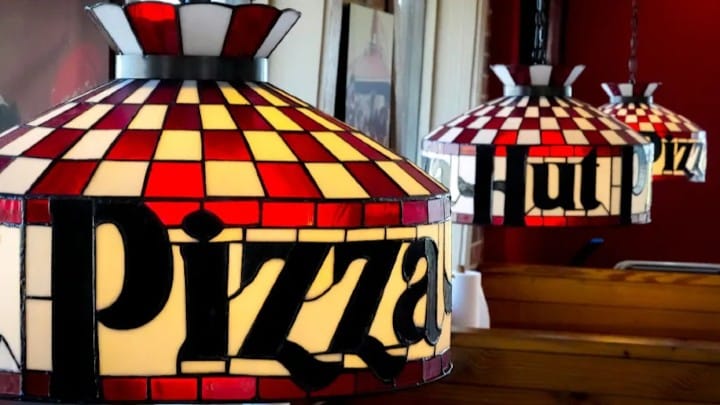
Exactly this is happening right now with “Pizza Hut Classic,” growing trend for that fast food chain, which have been remodeled in an intentionally retro style and designed to mirror those Pizza Huts from the 1980s. There are currently 155 “Pizza Hut Classics,” which were devised as part of a turnaround plan for Pizza Hut.
Much like the Disney Store of a few years ago, Pizza Hut has been struggling even as rival Domino’s explodes in popularity. Pizza Hut is closing 250 locations, but has a plan to stop the bleeding: nostalgia. The goal is to remodel select restaurants in its retro style to evoke nostalgia in customers and encourage them to return to the chain. According to Pizza Hut, the plan is working–and organically, without a major marketing campaign.
Per Pizza Hut, revisiting one of their classic dining rooms offers emotional grounding and a sense of control in an increasingly chaotic world. It feels familiar and feels authentic, comforting and sparks memories of gathering around the table with friends and family. These classic elements celebrate the brand’s heritage while reminding guests why Pizza Hut became part of so many family traditions in the first place.
At the risk of stating the obvious, if this plan is viable for Pizza Hut, it would work wonders for Disney, the preeminent American brand that trades in nostalgia, family memories, comfort and familiarity.
According to Inc, initiatives like this work thanks to “rosy retrospection,” a phenomenon in which people tend to focus on joyful moments from the distant past, as opposed to the negative. The older we get, the more we forget the bad and romanticize “the good old days.”
As Walt Disney World fans, we should be intimately familiar with this phenomenon. Bringing back the retro Disney Store could easily be the catalyst for getting middle class families back to Walt Disney World.
It’s not even remotely difficult to imagine how this plays out in practice, with sentimental marketing on the screens at the back of the store, vignettes of familiar characters, and more Disney Decade goodness. All aimed not at selling merchandise, but tugging at the heartstrings and reminding so many families of why they fell in love with Disney in the first place.
Closing Disney Stores Was a Mistake
I’d go a step further and argue that the old school Disney Stores actually never went out of style. At most, they needed a refresh. Experiential stores were still a thing in the 2010s. Nearby that Disney Store in Indianapolis, there was a Hollister. That brand had exploded in popularity by simulating a surf shack; it overflowed with aroma and offered an intimate layout that practically hid clothes from customers.
It was begging to be explored. And people loved it. The two stores were quite the juxtaposition, and I never would’ve expected Disney to be on the unthemed side of that ledger across from a clothing store. In another mall several stores offered their own themes: North Face, Urban Outfitters, Williams Sonoma, and Cheesecake Factory. (Critics of Cheesecake Factory are wrong. It’s quintessential Americana; excess done right.)
It wasn’t just factories selling cakes of cheese or upscale brands favoring this approach. Being from the Midwest, we had easy access to Cabela’s and Bass Pro Shops. If you’ve never visited either of these because you’re not a fisher or hunter, you are missing out. Cabela’s and Bass Pro Shops are truly an experience, with something for everyone.
The design of the stores themselves, and the attention to detail in the scenery and world-building, is all unrivaled. You can get lost in Cabela’s or Bass Pro Shops in the best way possible. They are inviting spaces that are calming and conducive to browsing, and just plain fun.
The Atlantic article, “Retailers Bet Wrong on America’s Feelings About Stores” described Bass Pro Shops as having “Disney-level production values” among other effusive praise. They’re right. Bass Pro Shops have incredible placemaking and wonderful settings that are fun places to be, while also making you want to buy stuff.
But there’s a certain irony in praising Bass Pro Shops for having Disney-level production values–even though they do–when Disney itself deliberately turned its back on this approach in its own stores.
Disney used to “get” this, and still does in other settings. When designing his park, Walt Disney was interested in theming and creating a place where people could feel reassured and at home. Imagineers have long created cozy and comforting spaces that feel warm, inviting and lived-in.
This is what made the cold sterility of the bland modern Disney Store designs so jarring. It’s completely at-odds with what Disney has done for decades. (See Designing Disney’s Theme Parks: The Architecture of Reassurance for a fantastic, albeit academic, read on the subject.)
It’s similarly why fans bemoan the boxy, bland, boring, and beige resort designs. Disney is able to “get away” with this thanks to the strength of its legacy offerings, but if everything originally were built like Lakeshore Lodge or Island Tower, Walt Disney World wouldn’t have nearly as many fans in the first place. Today’s offerings are leaching off the goodwill of bygone designs. But I digress.
Retail Renaissance
An article in Forbes, “The Resurgence Of Retail: Why Stores Are Gaining Favor Among Brands” explains why this approach is working for stores that focus on their customer experience. Another Forbes piece, “Brick-And-Mortar Makes A Comeback In A Changing Retail Landscape,” explains how physical stores are booming despite high-profile, attention-grabbing bankruptcies.
Harvard Business Review elaborates further, with the supporting stats. Not only was shopping-center vacancy in 2024 only 5.4%, the lowest in 20 years, but mall patronage is highest among younger Gen Z shoppers (ages 18 to 24) who grew up in the smartphone era. According to Census Bureau data, e-commerce as a portion of U.S. retail sales last year was 16.4%, barely above the 16.3% it reached during the height of COVID.
The dominant narrative of the past two decades, that brick-and-mortar stores will be replaced by e-commerce and direct-to-consumer (DTC) models, has proven demonstrably false. In fact, many companies that launched as DTC businesses are now pivoting, expanding their physical footprints.
The moral of the story is basically that companies miscalculated, assuming the internet would replace in-person shopping, and acted accordingly by shuttering stores. Since then, they’ve “discovered” that humans are social creatures yearning for communal and non-virtual experiences, and that online life is not a substitute for that.
This is accurate, but shouldn’t be particularly profound. As mentioned at the top, we had catalogs back in my day. It was an exciting moment when the mailman delivered the Toys R Us ‘Big Book’ and the same was true, to a lesser extent, for the Sears and other catalogs.
Thanks to the catalog, everything we wanted could’ve been ordered over the phone. And yet, retail had an explosive era of growth in the 1990s. The telephone and catalog combo did not doom brick-and-mortar retail.
The internet shifted the specifics, but it did not fundamentally change human nature. I love being able to pull up an app late at night, and have whatever we need on our doorstep by morning. But that’s usually for food or essentials, and not Figment toys, princess dresses, etc. Some things are simply more fun to purchase in-person.
Convenience is fantastic, and making fewer trips to Walmart or Target is nice. It’s great to minimize shopping as a chore or time drain–I am very much all for that. But there’s a distinction between that and shopping as an in-person experience.
During its prime, that is precisely what the Disney Store offered–an experience. A taste of the worlds of Disney that left visitors–and impressionable small children with the ability to persuade and plea with their parents–wanting more of their favorite characters and stories. It was a vehicle for brand awareness, that also happened to sell stuff.
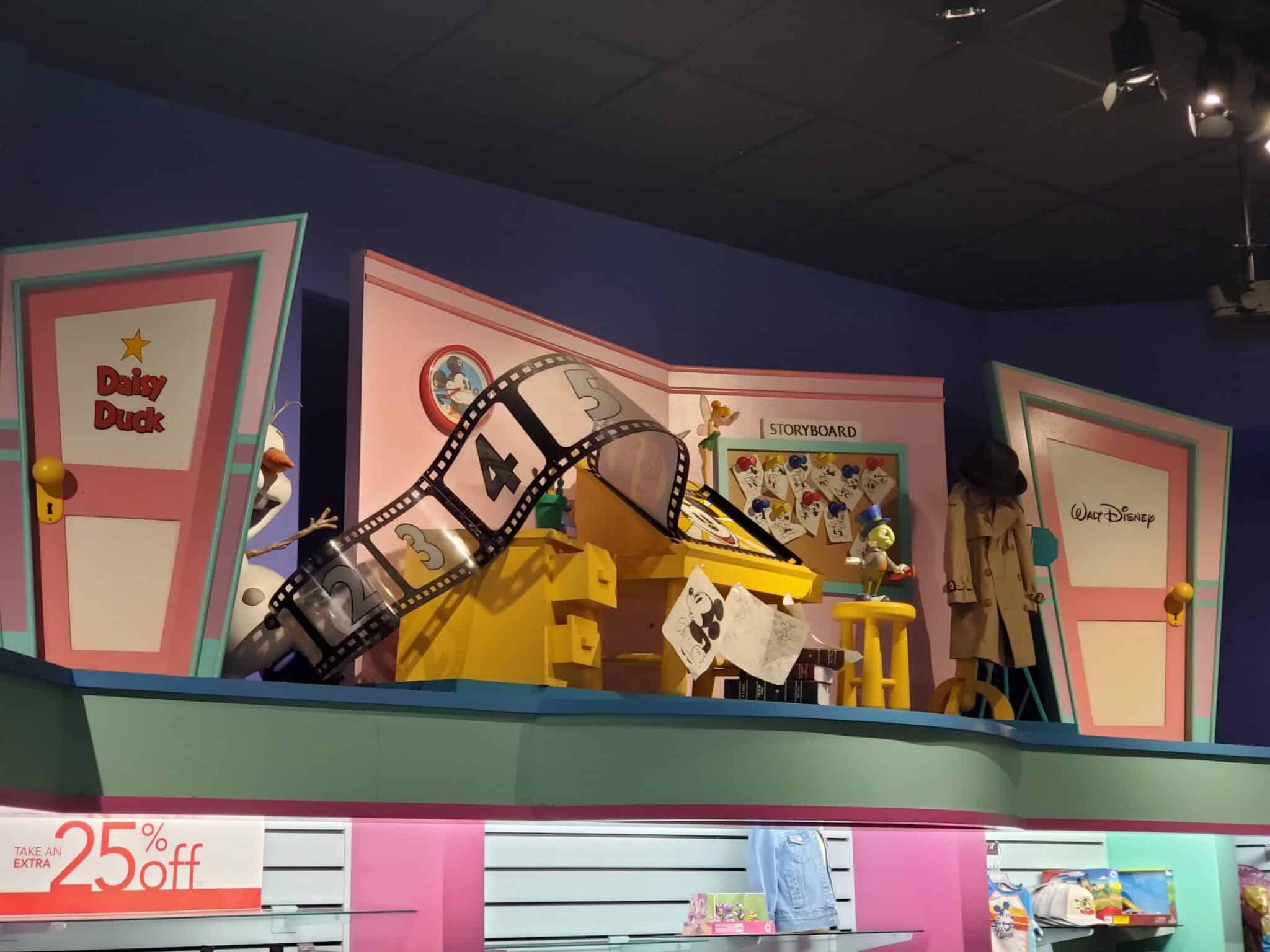
It absolutely boggles my mind that Disney deemed this a bad domestic business plan. That someone on a computer somewhere decided each location had to do X number in sales, and then “optimized” the store design to meet that target. That was never the point, or it never should’ve been the point! Disney Stores were a local outpost for families who didn’t live near Walt Disney World or Disneyland.
Countless companies operate specific retail locations at a loss in service of marketing the brand as a whole–does anyone actually think all of those luxury storefronts that seldom see customers making purchases are actually selling enough goods to cover rent? What they are selling is the brand name–the opulence and extravagance of it.
Disney is obviously no Chanel or Cartier. It’s something even better–a company in the business of selling a story and tugging at the heartstrings, making an emotional connection with its guests (not customers!).
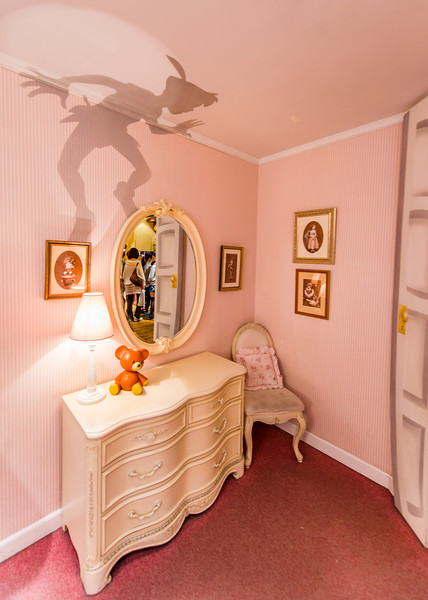
The proof that this works is still out there in the wild. There’s still a lavishly-designed, experiential Disney Store in Tokyo’s Shibuya district, and it is insanely popular. You can step inside the Toon Town-inspired exterior and explore its many floors, complete with character vignettes and fun photo backdrops along the way. The only downside is that it’s perpetually packed (and with a lot of people stopping for fun photos!), to the point that it can be difficult to navigate.
At a time when the ‘worlds’ of Disney have grown bigger than ever, retail is making a resurgence, and 1990s ‘more is more’ maximalist design sensibilities are starting to come back, it’s wild to me that no one within the company has thought, “maybe it would be good for us to revisit what made the OG Disney Store a success?” I’m not even a consumer products guy, but it seems to me that this is a task for Disney itself and Imagineering, and not something to outsource to an outfit called “Go! Retail Group.”
I’m not suggesting that Disney open another 700 of these puppies all at once; that would be irresponsible. But reflecting on the charm and character of the original Disney Store and trying to replicate that success wouldn’t be the worst idea. Beyond the brand goodwill, I strongly suspect the retro Disney Store could do incredible sales given how much limited-edition and unique merchandise has exploded for Disney.

The Disney Store as an experiential offering would do wonders for the brand. It could serve as a hub to pitch Disney+ and the latest bundles; showcase models of the newest Disney Cruise Line ships or Disney Vacation Club towers; feature lifesize character vignettes; offer vacation planning services.
Very few companies have as much to market and the same means to tug at the heart strings and resonate with our emotions. Selling a certain number of Simba stuffed animals isn’t the point. Selling the Disney brand and the lifestyle is, or should be. At the very least, rebuilding the Disney Store is a less bad idea than trying to build a so-called super app.
Need Disney trip planning tips and comprehensive advice? Make sure to read Disney Parks Vacation Planning Guides, where you can find comprehensive guides to Walt Disney World, Disneyland, and beyond! For Disney updates, discount information, free downloads of our eBooks and wallpapers, and much more, sign up for our FREE email newsletter!
YOUR THOUGHTS
What do you think of the Disney Store Limited Time? Should Disney itself bring back the ‘more is more’ experiential ethos of the 1990s Disney Store? Do you agree or disagree with our assessment? Any questions we can help you answer? Hearing your feedback–even when you disagree with us–is both interesting to us and helpful to other readers, so please share your thoughts below in the comments!
Judging by the number of teens swarming our Target, Panera and Starbucks, there’s definitely a demand for “shopping spaces as third places”.
I think part of the problem was / is rented spaces vs. standalone buildings that companies control. I’m not in any way shape or form speaking for every landlord, but as someone who used to need a small office space, there can be a pronounced tendency towards delusions of grandeur on the part of landlords when setting rents. Even as brick and mortars were closing left and right, rents were getting raised to unreasonable highs. I can completely understand stores not wanting to be at the mercy of where next years lease is set.
My friend and coworker Joni was the manager of the Disney store in Savannah Georgia. She truly loved her job and would always tell me stories of working at that store and what it meant to customers. I really hope they bring back more locations!!
What brought me into the Disney Store, every time, was the pre-order of a VHS movie release. Lines would be out the door twice – once to get on the limited pre-order list, and a second time to return to pick up the awesome VHS in all it’s plastic clamshell glory (plus a cool lithograph or animated cell or whatever that came as the incentive).
Now imagine modern Disney Stores doing something like this with a special release of merch related to all their in-theatre or Disney+ films. Fill in slower weeks/months with limited releases of park merch. Put up a travel concierge desk staffed with someone who can speak to theme park vacations, Disney Cruise Lines, DVD, Adventures by Disney, or just someone who can help folks navigate their trip planning. It would all pay for itself many times over.
I think you’re 100% right that Disney Stores at their best are brand outposts that feed the funnel into larger experiences and purchases (parks vacations, cruises, etc). Unfortunately, they were evaluated as standalone businesses that needed to justify their own existence on a dollar per square foot basis, in part because it’s really hard to quantify the “visited a store, booked a $10K vacation” pipeline.
It’s this same kind of thinking that led to the death of Magical Express. It’s not “worth it” in a very strict, spreadsheet sense, not acknowledging what it adds to brand perception and retention.
Wow. You really hit the nail on the head here, Tom! When I read this post my thought was this: Tom Bricker really “gets” Disney. This post needs to go directly to the desks of every c-suite occupant within the company 😉 And your closing line of this post speaks volumes of truth. When I read that Josh D’Amaro’s goal to leave his mark on the iconic company to which he’s been entrusted to lead, was to design a Disney super-app, a little more of the Disney magic that draws me to the parks faded away and was replaced by a melancholy yearning for the Disney I used to know and love. Bringing back the once iconic brick and mortar Disney Stores would give that elusive magical feeling a little shot in the arm every time I set foot in one.
You are so right! We all love the traditional cosy, retro Disney stores.
They styling drawers you in and the impact of lots of different merchandise, colour and choice is very appealing. Bring these back we want the nostalgia and happiness.
UK stores soon please!
Malls have gotten boring without Disney Stores, record stores, bookstores, & toystores. The mall closest to our house, West Oaks Mall in Ocoee Florida, has severe dead mall vibes & ever since Bath + Body Works left for a regular shopping plaza at the corner of Highway 50 & Hiawassee they have absolutely no stores of interest. Bath + Body Works is really the only store of interest at Mall at Millenia, too, unless you count getting a cookie sandwich at the food court, though I forget if that’s Great American Cookie Co. or something else like Mrs. Fields. Living in Orlando, I didn’t need Disney Stores as much as people living far from the parks, but they still were cool. They used to show previews of the latest movies.
I miss bookstores. On Saturdays when I had a low key outing instead of a theme park outing, going to the nearby Borders was a way to salvage the night, even if I just hung out & didn’t buy anything. Now all we have is the Barnes & Noble on Sand Lake Rd., & that’s lackluster. Its music section only has what’s popular to hypothetical people instead of catering to the niche tastes of real people. Like I couldn’t find Bing Crosby there from all the stuff catered towards the Top 40 crowd only. And while they may have had manga, they didn’t have anime DVDs. Online stores like Amazon are handy for finding the right volume if you’re collecting something like manga. It seemed going to libraries & bookstores, the volume I wanted was always missing. But a good bookstore, complete with DVDs & CDs, can be a fun place to while away the time when you don’t feel like being stuck at home. Or feel like doing all the walking the theme parks require just to get from the parking lot to the front gate, nonetheless all the hoofing it you’ll be doing inside.
Business execs should never be given say over creative people or the public. I used to like the Chevy’s in the plaza across from the WDW entrance, but once I went there & my favorite meal was gone, as well as anything that had made the restaurant unique. Must’ve been some exec’s idea to streamline the restaurant & think what he wanted was what everyone wanted. Execs who don’t understand what fans love about certain TV shows have also ruined those shows, thinking they know best what will get good ratings. And fans on Etsy & Redbubble do better with Disney merchandise designs than Disney itself.
“get anxious and impatient while my parents browsed Waldenbooks”
What?! My parents had to drag me out Waldenbooks. Granted this was pre-Disney Store era. By the time of Disney Stores I was a cast member living in Orlando.