
Battle of Bobs: Iger Admits He Discounted Chapek’s Weakness, Chapek Is Sad He Can’t Go to Disney World
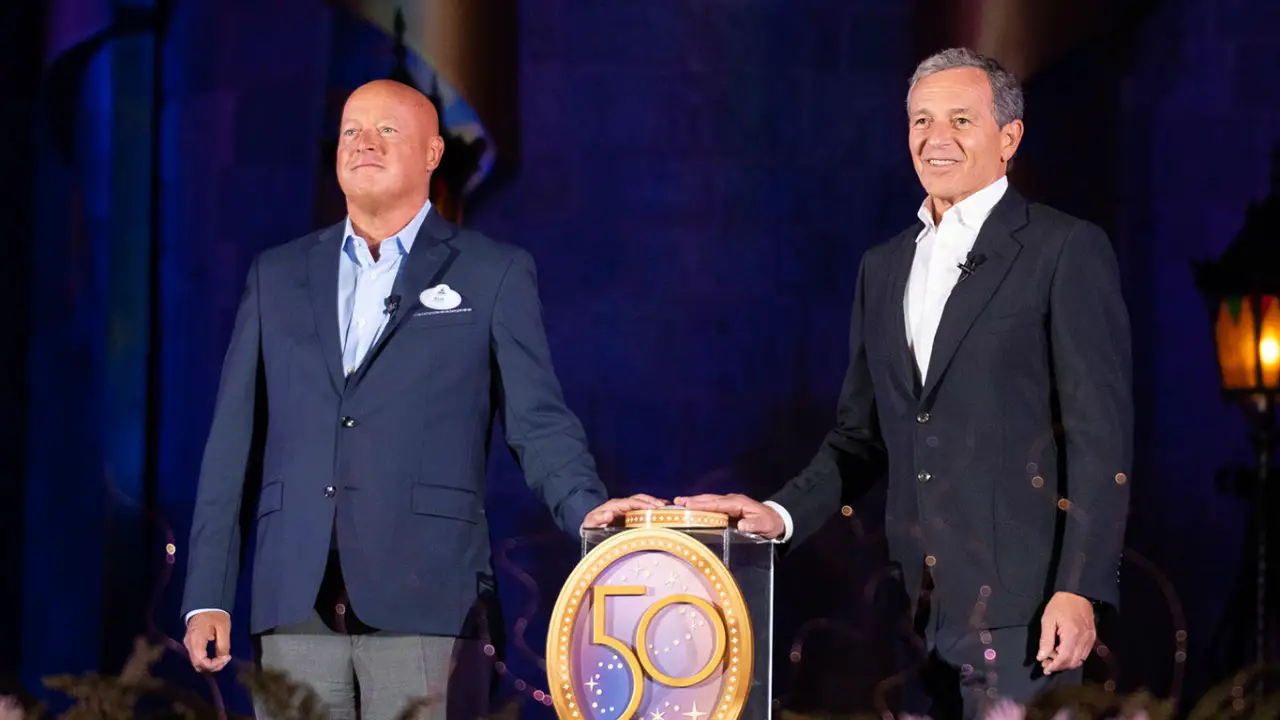
Shots have been fired (and returned!) in the Battle of the Bobs, now in its second consecutive day of active conflict. Disney’s Bob Swap™️ drama is heating back up thanks to dueling interviews from former CEOs Bob Chapek and Iger. And with that, Christmas has come early to the lovers of chaos and cattiness out there.
If you’ve just joined Bob vs. Bob already in progress, you’re in for a real treat. We aren’t going to recap everything that has transpired, but here’s a quick refresher. After being named CEO in early 2020, Disney Fired CEO Bob Chapek and Rehired Bob Iger as CEO back in November 2022.
There were a lot of subsequent developments in the Battle of the Bobs that trickled out over the course of the last four years, but the Disney drama had been colored by Bob Iger bias. It was obvious that the Iger camp was providing background, while Chapek kept pretty much completely silent.
Things have been mostly quiet for the last few years. With Bob Iger retiring (really for real this time) and “Drama-Free D’Amaro” taking over, we thought maybe this sordid saga was over. We thought wrong. Last month, it was announced that Bob Chapek’s memoir, titled Behind the Castle Walls: My Thirty Years at the Happiest Place on Earth, will be released on Tuesday, September 29, 2026.
Ahead of that, the Wall Street Journal has published its own interview tied to Bob Chapek’s upcoming memoir, largely covering his hiring and the five-month stretch between his contract extension and firing. This comes one day after Bob Chapek Said He’s ‘Pissed Off’ He Couldn’t Finish What He Started as CEO, and Defended Disney Parks Price Increases.
The WSJ piece is notable as it’s not an excerpt from the book; it’s Chapek’s first on-the-record interview since his ouster. And almost as if in response to that, Bob Iger has a new Harvard Business Review interview in which he takes the opportunity to besmirch the other Bob. If you ask me, the smartest thing Chapek ever did was shut his mouth for the last few years, as his own words are a more brutal indictment of his leadership than any barbs from the other Bob.
Here are a few key quotes and takeaways from the rekindled Battle of the Bobs, along with our added commentary…
Chapek’s COVID Conspiracy
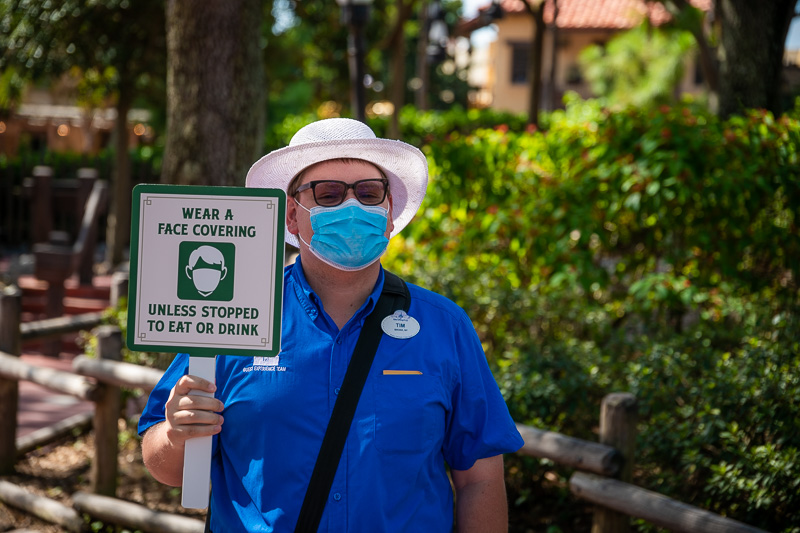
Yesterday’s NYT article had Chapek questioning the purported reasons for Iger stepping down abruptly as CEO in February 2020, and advancing a more conspiratorial explanation: “I have been told by several high-ranking people both in government and private business that in their opinions, the real reason he left the company so abruptly was his anticipation of the arrival of COVID.”
We mostly brushed the ‘conspiratorial’ portion of this off, giving Chapek the (rare) benefit of the doubt, as we agree with him that Bob Iger was motivated by COVID, despite his public claims to the contrary. Well, it would seem that Chapek actually does lean into the conspiratorial side of this.

Here’s what Chapek said to WSJ: “I have had plenty of people suggest to me that there was a small group of people that knew Covid was coming before the rest of the world. And certainly, given the magnitude of what was about to happen, the idea of laying off or furloughing 110,000 people was not consistent with what some people would want their public image to be.”
This suggests that Chapek actually believes Iger was part of some cabal of global elites with insider info about COVID before it went public. One would think that Bob Chapek as Parks Chairman would appreciate the gravity of the COVID situation as of February 25, 2020 when he became CEO. After all, it was exactly one month earlier, on January 25, 2020, when Shanghai Disneyland closed due to COVID. One day later, Hong Kong Disneyland closed.
In fairness to Chapek, it’s conceivable that he was asleep at the wheel and didn’t realize that two of the theme parks he oversaw had closed a month earlier due to COVID when he was named CEO. When viewed through the prism of incompetence, his conspiratorial thinking is perfectly logical.
Chapek Actually Turned Things Around
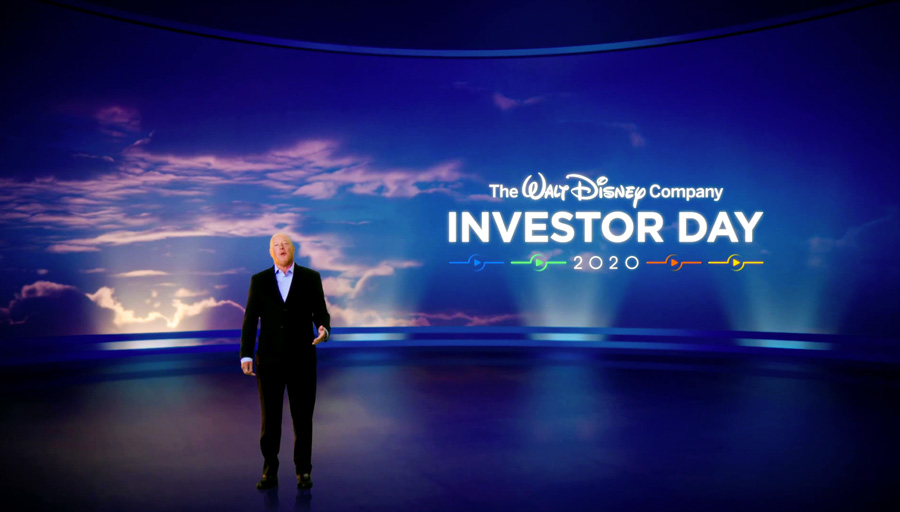
In Chapek’s retelling of his final tumultuous five months at the helm, he had righted the ship. As he explains, Disney’s earnings had mostly exceeded Wall Street expectations during his tenure. This was despite runaway spending on streaming and the Parks & Resorts underperforming due to ongoing COVID constraints.
According to Chapek, there was one quarter when Disney sustained peak losses on streaming (to the tune of $1.5 billion!). That garnered a lot of headlines, and presented Iger with the “opportunity to make good on whatever [he] wanted. And there would not have been another opportunity because after that, I said that Disney+ would be profitable at a certain point in time and, guess what? It was.”
Chapek elaborated further on this point when explaining how he wanted to be remembered: “As the guy who came in at the most difficult time in the company’s history and did an admirable and stellar job of saving it from what was very possibly its demise due to two years of no revenue combined with enormous debt from the Fox acquisition at a time where there was a lot of social unrest. For three years, I positioned the company for success and that made it a lot easier for someone else to step in, once the dust had settled.”
I feel like this one doesn’t even warrant analysis. Even the Chapek Truthers who believe Iger was worse, set him up for failure, etc., don’t claim (at least to my knowledge) that Chapek saved Disney from demise. The most charitable claims that I’ve seen all center around Chapek being a ‘necessary evil’ or that sort of thing. Does anyone view him as a savior?!
Chapek Hasn’t Been Back to Walt Disney World
Chapek reveals that he hasn’t been back to Walt Disney World since being fired, and that he probably never will. When asked about how this makes him feel, Chapek says “very sad.”
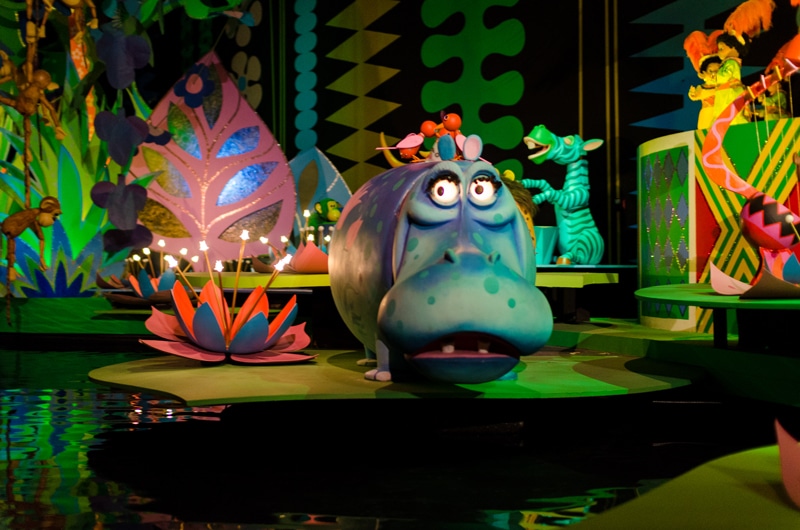
He adds that Walt Disney World “was a part of my life even before I joined the company. But I feel so let down, so disillusioned. Never say never, but I don’t think the effort to erase my time as CEO is very consistent with me wanting to go back on ‘It’s a Small World.'” [Insert obligatory hippo photo.]
In a recent interview, Michael Eisner revealed that he hadn’t been back inside the building with his name on it since he left Disney. When asked about the last time he had been back inside the building, he said this: “Inside in the offices, on the day I left. Not that I haven’t been invited. I’ve been invited. Once you sell your house, you move on.”
No matter how you feel about Michael Eisner or the end of his reign, he is undeniably a Disney Guy, through and through. He’s been back to the parks on many occasions in the last 20 years, visiting as a regular guest without a team of handlers–just his family.

I have never seen a photo of Bob Chapek casually visiting the parks. Not during his time as Parks Chair, not as CEO, and certainly not since. There are times when photos were taken of him as part of media events or board tours, but even those are a rarity.
When Josh D’Amaro was named CEO, my social media feed was flooded with selfies regular fans had taken with him in the parks. It seemed like everyone had a photo with the dude. On the day Chapek left, the only outpouring of photos like that featured fans with Bob Iger (and still to a far lesser extent than D’Amaro).
I know Chapek previously claimed his children and grandchildren were a “Disney family” and he couldn’t bring himself to file a lawsuit that might hurt the company, but there is nothing to suggest that Chapek had a keen personal interest in Walt Disney World or Disneyland. To the contrary, all available evidence points to Chapek having a disdain towards the parks & resorts, and fans of the “product.”

Iger Overlooked Chapek’s Weaknesses
On the same day that Chapek’s first interview since his firing, a new Bob Iger HBR interview dropped. The timing was likely serendipitous as opposed to deliberate, but it’s still amusing. Most of the interview revolves around leadership and is not a direct rebuttal to Chapek or his book. To the contrary, the word “Chapek” does not appear in the interview even once.
Although not by name, Chapek does come up when discussing succession planning:
We had a process back in 2019 and ’20 when we chose my successor. Looking back, perhaps it wasn’t as thorough as we thought, in part because we thought we knew the person extremely well. He’d worked for the company for a very long time and for me directly. And we knew his strengths and we knew some of his weaknesses as well.
I’m not suggesting that we discounted the weaknesses, but in our zeal to check a box with succession and enable me to move on, first as executive chairman and ultimately to leave, I’m not suggesting that we ignored some of the issues, but I think we discounted them a bit more.
Iger went on to explain that we live in an age where “crisis is almost omnipresent,” and leaders nowadays need to be able to operate in an environment in which a crisis can occur on a regular basis. That requires a different kind of leadership, which he did not realize at the time.
With the benefit of hindsight, Iger explains, he understands that leaders need to be able to admit there’s a crisis and deal with it, while never losing hope and optimism. That just needs to be balanced with realism for the situation, as well as a good team to collaborate and contend with the crisis. “You can’t retreat to a bunker,” Iger explained.
He continued by adding that as Disney approached succession the next time around, “we asked ourselves some of these very questions about that person. Is he resilient? Does he have the stamina? Does he choose a good team? Is he someone who can call it what it is, meaning we’re in a real crisis, but then deal with it in a reasonable and sane and steady way, mature way?”
In terms of commentary, I’m not surprised by this shot at Chapek, or the critique itself. One thing I’ve heard from multiple people at Disney was that Chapek just did not listen. That he was not a collaborative leader, did not receive constructive criticism well, and was prone to becoming entrenched in his positions despite advice to the contrary. This is certainly at odds with the words from his recent interviews, but it comports pretty perfectly with his overall attitude.
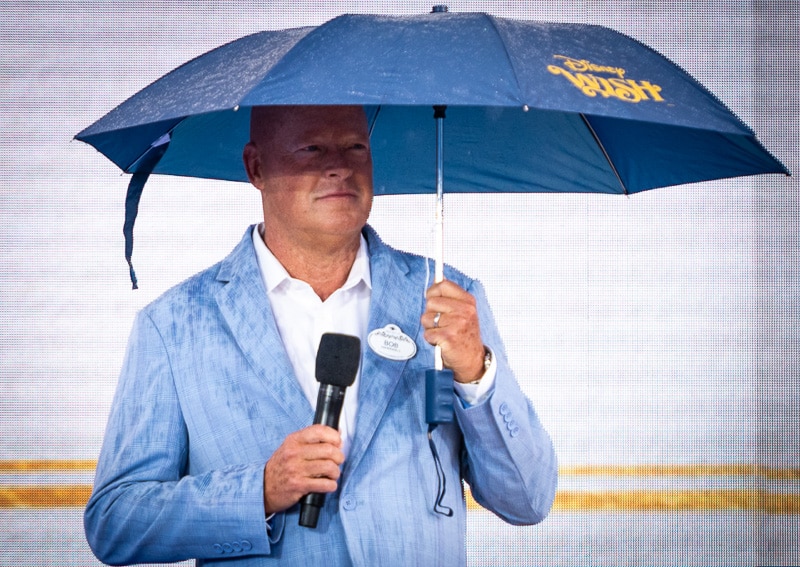
Sympathy for the Umbrella Man?
As I’ve said before, I do feel slight sympathy for Chapek. He was not set up for success, and was thrown headfirst into a situation that would’ve been difficult for even a skilled and experienced executive. Having Iger breathe down his neck only exacerbated this. Maybe things would’ve played out differently if Iger didn’t step down in 2020, but instead stayed through the storm, began the succession process then, and left the company in early 2022.
The process would’ve played out differently, but the end result still would’ve been the same. Chapek would not have been CEO by the end of 2022. Not because he would’ve been fired so fast, but because he never would’ve been chosen as CEO in the first place; Bob Iger would’ve realized the error of his ways and chosen someone else were he not in such a rush to name a successor in early 2020.
It’s obvious that Iger had buyer’s remorse with Chapek. Based on subsequent interviews and articles, we know that Iger choosing Chapek as his successor was the “worst mistake” of Iger’s career. Even Michael Eisner has chimed in about the Chapek era, calling it a “marriage made hell” and “mistake” defined by Chapek proving that he was the boss “by doing stupid things.”

A big part of what’s fascinating about the after-the-fact commentary is that Bob Chapek was a known quantity even before becoming CEO. Both Bobs knew that Chapek lacked Iger’s charisma and wasn’t a natural communicator. Even Chapek acknowledged that he had low “E.Q.,” or emotional intelligence, and Iger urged him to work on improving this!
It’s difficult to believe that Iger didn’t know exactly what he was getting with Bob Chapek. It feels like an eternity ago, but Bob Chapek was well-known among Disney theme park fans and was widely disliked even before 2020. This is despite Chapek presiding over Parks & Resorts during an era of expansion.
Plenty of Disney fans still strongly dislike Bob Chapek. Many more have now soured on Bob Iger. This strikes me as a fair and valid response to the revelations, acts and omissions of the last several years. At absolute minimum, Iger unleashed Chapek on the world when he should’ve known better.

What I find far less reasonable is the growing chorus of Chapek apologists. Among other things, there are fans who frame Chapek as a victim of circumstance, who only failed because he was ‘set up’ as the fall guy, or would have succeeded but for Iger’s meddling.
Frankly, this perspective requires overlooking not only Chapek’s own words, but his agency and intelligence. To believe all of that, you must also, bluntly, believe him to be an absolute moron. Someone who shouldn’t have been within a mile of the c-suite in the first place.
While I believe Chapek’s boasts that he had low EQ, he is no fool. Low EQ makes him unfit to lead a company like Disney, and an equally poor advocate for his own legacy in interviews. It does not make him unintelligent. He very clearly has business acumen and has the rare talent for squeezing blood from a turnip. I fully believe Chapek could’ve had a fruitful career in consumer products or perhaps as the invisible CFO of some other company as a counterweight to creative leadership.
Instead, Bob Chapek chose of his own free will to accept the role of CEO of the Walt Disney Company in February 2020. He knew exactly what that entailed, the baggage that came with it, and the critical crossroads at which he stood. He knew unpopular decisions would need to be made, and he did so while embracing his own worst impulses, all with a smug smile and an outstretched finger towards fans.
This is also why it’s tough to be sympathetic towards Bob Chapek. I’m not going to belabor the incalculable x-factors he lacked. Just listen to him talk if you need proof he was not equipped to lead one of the world’s most cherished companies. He was dealt a bad deck, but he chose to sit at the grown up’s table and play in the first place. And then he proceeded to play the absolute worst cards possible, all while he seemingly relished insulting and antagonizing fans.
It’s also difficult to feel too badly for Bob Chapek given the damage he inflicted on Walt Disney World, Disneyland and the company as a whole, much of which has since been undone but a lot likely never will be. There’s also the fact that Chapek was paid $20 million in severance to go kick rocks. (Money well spent by Disney, if you ask me!)
Need Disney trip planning tips and comprehensive advice? Make sure to read Disney Parks Vacation Planning Guides, where you can find comprehensive guides to Walt Disney World, Disneyland, and beyond! For Disney updates, discount information, free downloads of our eBooks and wallpapers, and much more, sign up for our FREE email newsletter!
YOUR THOUGHTS
What are your thoughts on the renewed Battle of the Bobs? Do you feel more sympathetic to Chapek now than you did in 2022? Anything to add about Disney’s Bob Swap? Agree or disagree with our analysis? Hearing your perspective–even when you disagree with us–is both interesting to us and helpful to other readers, so please share your thoughts below in the comments!




Someone needs to hand Iger a mirror….a leader can’t hide in a bunker when a crisis is on the horizon? Seriously, Iger quickly hopped on his yacht, funded by Disney, leaving his college professor wife in California to teach students remotely, while he sailed around the DHL islands and hastingly left Chapek in charge. Anyone who follows international news knew covid was on it’s way in November 2019, and definitely by December 2019. None of us waited until the government told us it was here and spreading in March 2020. I was going around to every Publix, Walmart, Walgreens etc,in December 2019 buying every package of face masks, toilet paper, disinfectant wipes, and dried foods cause I always follow international news. Iger knew what was coming, no doubt about it. How Chapek didn’t get it is beyond ignorant. There were coworkers of mine who thought I was crazy for prepping because of something on the other side of the world, but like you wrote Tom, Chapek was the head of parks and resorts at the time and if he wasn’t taking the closure of two Asian Disney theme parks seriously then he isn’t that bright.
Chapek fundamentally does not understand that profit is not the only measure of a company or its leaders. Sadly, he’s not alone these days.
Maybe Eisner just enjoys being retired. After retiring twice from two different companies at age 68 and working since in was 16 it’s nice to just do what you want to do at your own time and own pace. Have had offers wanting me to go back to work since being retired and nicely say, thank you, but no thank you. Being 70 has a new set of things you want to do.
I equate this how Chapek thing to a former “history” where a similar thing happened Apple.
And it when Steve Jobs brought in Pepsi-dude “John Sculley” to basically lead Apple. LOng story short – he did improve profits, but over the course of several years destroyed the brand and what Apple was (if you know, you know…). And of course it took Jobs to come back to right the ship. Of course during his time away he started Next computer which in-turn became the Mac’s new OS, and of course bought Pixar from Lucus.
At the risk of sounding like a Chapek fan, or like an armchair expert, I’m genuinely curious if there’s an alternative universe where he could have succeeded, and how few decisions it would have taken to make that happen. After all, it wasn’t long after reopening that demand at the parks far exceeded supply. Instead of seizing that as an opportunity to squeeze as much revenue out of fans at (literally) their expense in order to “subsidize” streaming, he could have seized that opportunity to build lifelong, high-touch fans. The increase in popularity of live streamers at the parks, bloggers, etc. should have made it clear that people wanted a different relationship with the parks, and that building long-term (not short-term) growth around that would be better in the long run.
He could have made the unpopular decisions on the streaming/ESPN side to balance the books where they actually needed to be balanced.
Wait a minute, isn’t that what Iger ended up doing upon his return? Sure, Chapek had/has low E.Q., but like you said, not low IQ. But it seemed like all of his decisions were primarily influenced by Wall Street. Even if the primary objective was profitability with Disney+, there was a path to get there that would not have sacrificed as much fan goodwill. And if part of his downfall was Iger breathing down his neck, I’m inclined to think some of that was Iger trying to offer useful advice.
Thanks for sharing. This is a well written piece.
I think that Chapek and Jeffrey Immelt need to start a support group for victims of Celebrity CEO succession plans gone wrong. There are many similarities to Welch and Iger. They both left write before massive geopolitical disasters, COVID and 9/11. They both left massive messes to clean up, D+ and GE Finance and they also left a major shadow. But what ultimately doomed both of these 2 was their egos. What it takes to succeed a celebrity CEO is a CEO willing to check his/her ego at the door and make everything about the company, the employee, the customer, etc. A true Level 5 leader. And neither of these 2 qualified and they did major damage during their failed tenures.
I’m so impressed by how well written and insightful this piece is, nicely done. I’d not heard the Iger-China-Covid conspiracy theory, but hmm, that timing!
I’m somehow even less sympathetic to Chapek after all these years. Publishing a catty book is a really low class move. Eisner never did that, and he was treated much more unjustly than Chapek on the way out. I’m glad Iger came back, but I think his reputation will fade a bit over time. It is clear that Iger rushed the transition, seeing the covid writing on the wall, and then he used some underhanded tactics to oust Chapek (though for good reason). Eisner, on the other hand, has been vindicated as the best leader of the company since Walt. I wish they’d find a way to get him back involved with the company in some honorary way. I’d bet he’d enjoy working on some architecture projects.
“I’m glad Iger came back, but I think his reputation will fade a bit over time.”
Definitely agree with this, and I’d add deservedly so. In the broader business world, Iger still enjoys a much more positive perception than he does within the fan community. I suspect that will change to some degree as a result of this. On the other hand, I doubt Wall Street is going to hold Chapek in higher esteem or give him a second chance as a result of this book. Highly doubt it’s going to accomplish the image rehab he clearly wants.
My sense is that Eisner enjoys just doing his own thing, weighing in periodically. I’m very confident that the company has not purposefully excluded him over the last decade; it’s been by Eisner’s choice. With the passage of time, I wouldn’t be surprised if he becomes more involved. At minimum, I think we’ll eventually see him at a D23.
“Eisner, on the other hand, has been vindicated as the best leader of the company since Walt.”
If you ignored what he did to stay in power. Iger did the exact same thing as Eisner. They stayed beyond their ability to fix the problems they created. And in another example, Eisner famously refused to buy Pixar, thus cutting off future 3D animation releases. Iger bought Pixar and it has declined with recent flops and employees cut including Lasseter.
I will always have a soft spot for Eisner because he is the person who looked at Alien Encounter and said “make it scarier.” Tomorrowland will forever be a little bit duller without that ride.
100% agree on the architecture. We are currently in our first ever stay at Boardwalk, but have stayed at Eisner’s other projects including Beach Club, Grand Flo, and Wilderness Lodge. Compared to stays at Riviera, nothing makes us feel more in the “bubble” than Eisner’s hotels. I still think he could have made the Mickey shaped hotel a reality. The excitement Eisner had in the first half of his tenure is still everywhere.
Eisner was, without question, Disney’s best leader since the original Walt and Roy team. His highly themed resorts, major park additions and expansions, the growth of Disney Springs, and some of Disney’s greatest films (from The Little Mermaid through The Lion King, as well as the first Pixar releases) helped define a golden era for the company. Add in innovations such as SpectroMagic, Wishes, FastPass, Disney Vacation Club, and Magical Express, and his legacy is legendary.
The two Bobs, not so much. Iger inherited an incredibly strong foundation built during the Eisner years and, in my view, did not elevate the company to anywhere near the same degree. In fact, under his leadership, Disney’s family-friendly reputation was questioned in a way it never had been before. Combined with poor succession planning and a shift toward bland, office-building-style resort design, that’s what defines Iger’s legacy to me.